BackReturn Home

Medicine In A Week

WARNING: This is not to be considered medical advice or relied upon as a source of medical education. I am not a doctor, but I do hope that it offers some helpful food for thought if you are a med student. While we will try to explain things simply, it is presented under the assumption that one already knows some basic Medicine. As an additional warning, there is talk of abuse, trauma, and death, as well as some illustrated nudity.

Contents

Introduction
Method of Diagnosis #1: Complex of Symptoms
Method of Diagnosis #2: Affected Region(s)
Method of Diagnosis #3: Affected System(s) and Process(es)
The Three Methods of Diagnosis are Inherent to History Taking
The Physical Exam
Diagnostics
Final Assessment
Treatment Plan (Present & Future)
Medical Records
Hospital Structure
Self-Care and The Heart of a Healer


Introduction

While the title is somewhat "tongue in cheek," I find it interesting to consider how one could "learn Medicine" in the shortest amount of time as possible. Whenever I am tasked with learning something complex, I am always guided to do two things:

1. Simplify
2. Integrate

To elaborate...

1. One might experience a bit of frustration with a curriculum that does not explain the why behind what is being taught. Information that is unmotivated is rarely meaningful or memorable. Getting clear on our purpose needs to be done from the outset. This will help us to refine our goals and will keep us motivated. Whenever we are reminded of our God-given purpose, we are sustained throughout any discouragement that we might experience.

Simplification often revolves around finding this why, reducing something to what is both essential and easily understandable. For example, what is the most succinct definition of what one is aiming for in Medicine? Restoration. You are helping to guide each person from a temporary state of injury or illness towards a lasting state of wellness.

The question then becomes, "How can we keep this intention ever before us?"

2. Integration is to unite into one cohesive whole. It is to look for connections across seemingly different domains, and to create a reliable scaffolding upon which to add more material. For every single "fact" that we encounter, we need to ask ourselves, "How does this relate to what I am already aware of? How can this be applied towards helping others to heal?"

A dear friend of mine once made the analogy that med school is like chess: The first year is like learning how all of the pieces move and getting an idea of the rules of the game, while the second year is like finally getting to play practice games.

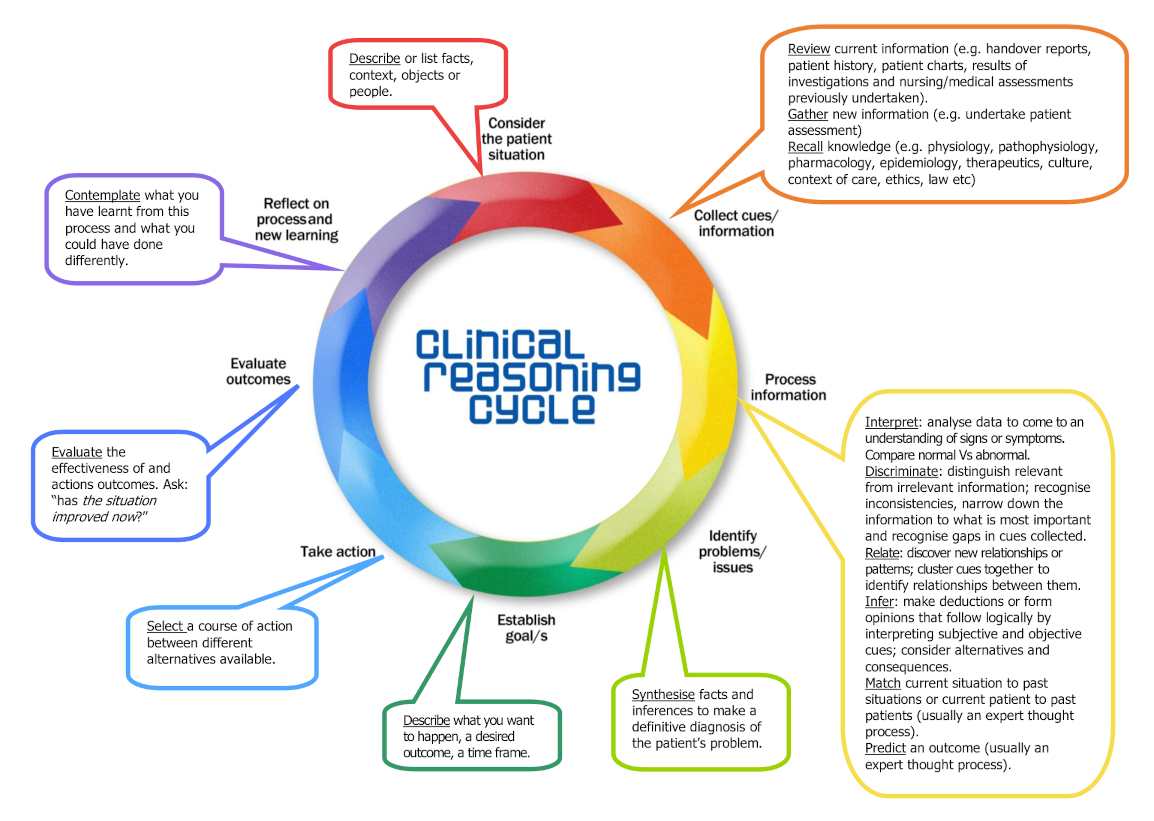
"How the pieces move" is akin to learning the basic medical sciences, like Anatomy, Physiology, Pathology, Microbiology, Biochemistry, Pharmacology, and so on. One of the main "rules of the game" is what some might refer to as the clinical reasoning cycle:

Photo Credit: Clinical Reasoning: Instructor Resources

The "practice games" are what one would do in their rounds within each of the core clerkships (e.g.: Internal Medicine, Surgery, Pediatrics, Obstetrics and Gynecology, Psychiatry, Family Medicine, Emergency Medicine, and Neurology, depending on the med school).

Each of them has some amount of specialist knowledge, and one's approach in implementing it might also vary a little. This is determined by where that encounter takes place and under what circumstances. For example, treatment within an emergency department, within an inpatient facility, or within an "ambulatory" setting are all a bit different. People often move fluidly between these places too.

However, no matter the specialty, they are still generally united by the same clinical reasoning cycle described above. This provides a useful framework for organizing the information that one has learned, and will continue to learn, throughout their practice of Medicine. I feel that this is most strongly exemplified by the process of taking a history and the different ways of formulating a diagnosis. Let's explore these together...


Method of Diagnosis #1: Complex of Symptoms

The first method that comes to mind is sometimes known as a “complex of symptoms.” I imagine that it is what most clinicians do immediately upon interacting with a patient: They think of what ailment(s) could be associated with the set of symptoms that they have described, starting with the most common ones and moving on to the more obscure ones as the possibilities are carefully ruled out. Although, to do this effectively requires a strong understanding of Pathology, an awareness of many different types of diseases and why the particular symptoms of each of them appear (i.e: their pathogenesis).

Med school students may have trouble with this method due to how they study. They could probably list out all of the symptoms of a familiar illness when given its name, but are unable to name that exact same illness when observing the signs of it within a patient. They know it in one direction only.

How we take in information can influence our capability to recall it. Therefore, it is often best to get an idea of the context in which that information would be beneficially applied. "Cramming" is not conducive to the deep understanding required for long-term memorization and careful application.

I would even go so far as to say that these considerations take precedence over "academic distinctions" of any kind. Competition, and the pride that drives it, is poison to the type of collaboration necessary in order to deliver effective healthcare. There is always some degree of teamwork involved, whether it be between healthcare providers working as a group (such as doctors and nurses), or between a single doctor and a patient trying to find healing together. Sometimes the training methods used within med school undermine their own aims.

Thankfully, a lot can be conveyed with very little. Upon hearing someone's age, everything that you know about Pediatrics will come to the forefront of your mind if they are a child, or about Geriatrics if they are elderly. Upon hearing that they are female, Ob-Gyn related topics will bubble up. Before you know it, many things will start to fall into place as your thoughts and perceptions become more coherently organized.

From these two "pieces" of information alone, age and sex, one can start to consider if that person has any risk factors that would affect the diagnosis possibilities. Likewise, a smaller number of ailments is immediately implied by their Chief Complaint (CC), the main reason why they are seeking out healthcare. This becomes the basis for the initial Differential Diagnosis (DDx), a small cluster of illnesses whose symptoms/signs seem to overlap. The possibilities are further reduced as more information is gathered.


Method of Diagnosis #2: Affected Region(s)

I will refer to the next method of diagnosis as "affected region(s)." It usually coincides with the next part of history taking, the History of Present Illness (HPI). The "elements" of the HPI are questions that help to uncover the nature of the symptoms that accompany their CC, like pain. We should not follow a script. But if we need a guideline for the types of questions to ask, it could be summarized through various acronyms/mnemonics, such as SOCRATES, OPQRST, or OLD CARTS. To go with the latter:

Onset When did it appear? Did it come on suddenly or gradually? Was there anything specific that triggered it?
Location Where do you feel it? Does it move around or stay in place? Is it concentrated in a given area or is it spread out?
Duration How long does it last? Does it come and go, or is it constant?
Character What type of sensation is it (e.g.: pressure, tingling, burning, throbbing, etc.)?
Aggravating factors Is there anything that makes it feel worse?
Relieving factors Is there anything that makes it feel better?
Timing Does it follow a pattern (e.g.: appearing at a particular time of day)?
Severity How intense is it on a scale of 1 to 10? If it has happened before, is it worse than any past episodes?

The questions are open-ended and do not lead them to the answers that we expect. We cannot make assumptions about what that person is experiencing and must seek to clarify the meaning of the words that they are actually using to describe their CC. We cannot associate it with an accurate DDx otherwise. The catch? They probably won't be using words that are medically accurate.

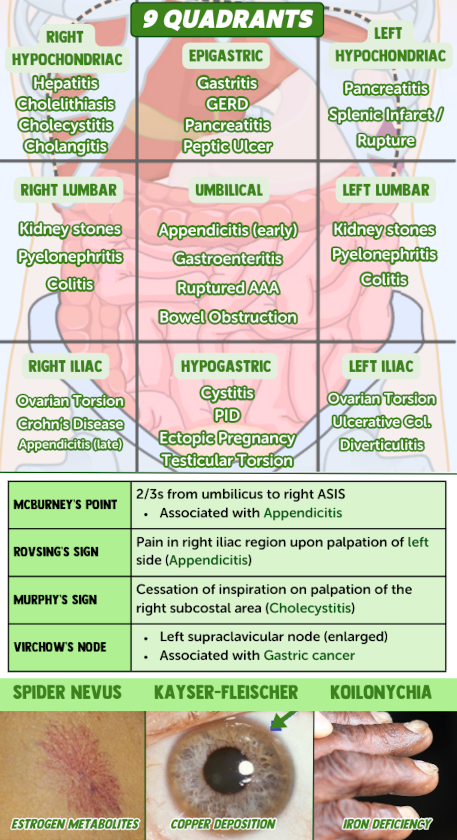
With a strong understanding of Anatomy and the answers to these questions (especially location and character), one can further refine the DDx. It may even be possible to map a DDx directly to the body, or to immediately perceive some distinct sign(s) of a particular illness if one knows what to look for. For example, let's look at the abdomen and some signs related to illnesses affecting the organs within it:

Photo Credit: MedSchoolBro - OSCE Pocket Guide (Preview)

A lot can be learned at a glance from a good diagram. For example, pain in one of those nine quadrants could be a signal that the person has one of the ailments listed there.

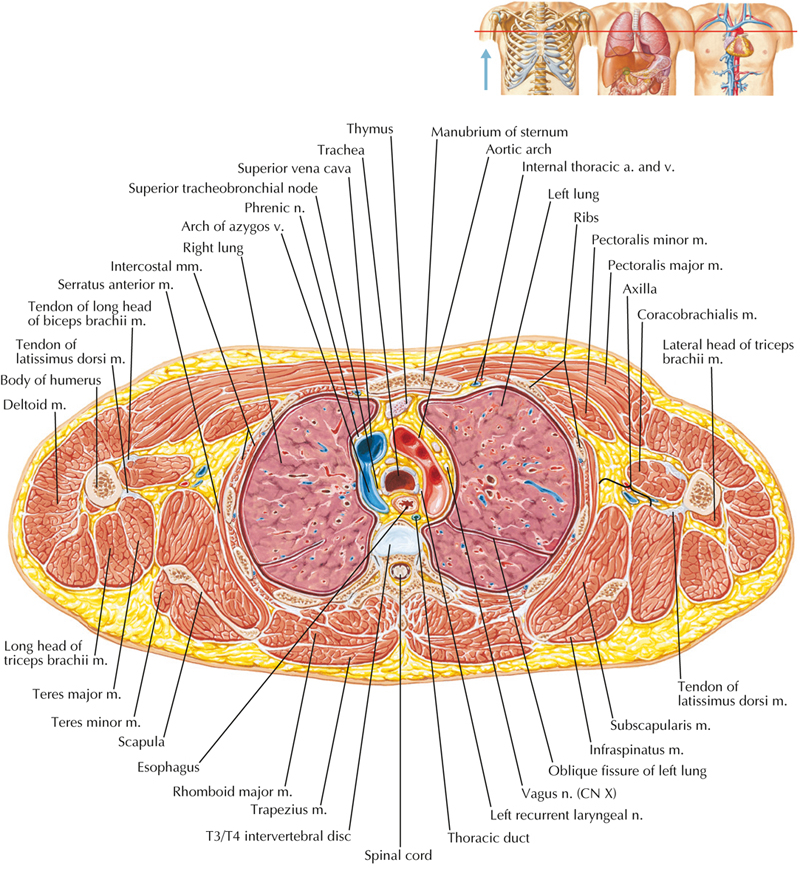
If one has trained their visualization skills, they can try to think of what exists within that region of the body and move layer-by-layer from the outside to the inside, from superficial to deep as if their mind was an MRI machine. Think of a cross-section through that area of the body. For example, let's look at the thorax:

Photo Credit: Netter Atlas of Human Anatomy (8th Edition)

Does a chest pain come specifically from a pectoral muscle, a rib, the thymus gland, a lung, the heart, etc.? It means something different in each instance. Be precise. For example, if it is a lung, is it the left or the right one? This method can give us a lot of insight, but it has its limitations. A patient may lack the descriptive language to be able to effectively convey the location or character of a pain, speaking only vaguely. But we cannot put words in their mouth or use medical terms that they won't understand.

Moreover, local effects do not necessarily equate to local causes, like in the case of referred pain. In other words, a pain in one location could actually be caused by something that seems distant from it. We must understand how things are interconnected.

Excluding any anatomical variations, one's study approach could make the human body seem more like a patchwork quilt instead of a tightly integrated network of forms. For example: The locations of origins and insertions on each bone hint at how the muscles will move them. Therefore, they should not be memorized as a list, but in relation to their actions within the body. Further, if your own body is the reference model, then your "cheat sheet" is always on you. Move a limb and think of which muscles are being activated as you do so. This will help us to recognize their condition within the people we observe.


Method of Diagnosis #3: Affected System(s) and Process(es)

The final method of forming a diagnosis here could be called "affected system(s) and process(es)." It requires a strong understanding of Physiology (and the Microbiology, Biochemistry, and Pharmacology related to it). It exists in complement to the previous two methods of diagnosis that we've already mentioned. While it might seem complex, we will try to simplify it by showing some relationships that will allow us to sort out a huge amount of information into a smaller number of useful categories.

Much like how Anatomy describes the forms of the body, Physiology describes its functions. Further, Physiology could also be thought of as the opposite of Pathology in that it helps to describe how the body works rather than how it can malfunction. To give a very general summary of the life-sustaining functions that each organ system carries out:

General Bodily Function(s) Organ System
Support + Movement
Skeletal
Muscular
Protection
Integumentary
Control
Nervous
Endocrine
Transport
Cardiovascular
Lymphatic
Absorption + Excretion
Respiratory
Digestive
Urinary
Procreation
Reproductive

There is also a simple concept that lies at the very core of Physiology: homeostasis.

Homeostasis is the ability of a system to keep a consistent internal state. Generally, it is accomplished through feedback. Feedback is when the results of a process are "fed back" into the process itself, forming a loop. There are two types of feedback:

+ "positive feedback," where the results of a process increase its activity
- "negative feedback," where the results of a process decrease its activity

Many of the processes which sustain the health of the body are negative feedback loops carried out by the organ systems, whereas symptoms are signals of something out of balance. Diseases tend to be positive feedback loops, increasing in severity when their underlying causes are not addressed. This understanding is encapsulated within the somewhat ironic term, "Pathophysiology." Keep all of this in the back of your mind as we go through the next three parts of taking a history...

Past Medical History (PMHx) is finding out about any prior illnesses, injuries / trauma, surgeries, immunizations, and previous visits to the hospital. For example, have they had an accident requiring medical attention before? We might also ask for permission to access their medical records at this time.

The PMHx includes getting a comprehensive and complete overview of all medications that they have been prescribed or that they take over the counter: their names, the dosages, the reason for taking it, and the person's "compliance" or lack of it (i.e.: how often they take it and if they follow the recommendations as they do so). The route by which a medication is received is sometimes relevant as well, affecting how quickly it acts upon the body and for how long. To give a simple example, a substance that is inhaled can reach the bloodstream faster than one ingested orally...Notice how everything that you know about Pharmacodynamics is beginning to surface. ☺

It is important to note that, just because a thing has been prescribed, does not necessarily mean that it is being used or done. To give a couple of examples: Some people might stop taking a medication without telling their doctor if they seem to experience an adverse reaction. Or, they may have other issues that make them forgetful to the point of never taking it or doing it incorrectly. Again, much can be conveyed by subtle details. But how does this knowledge affect a DDx?

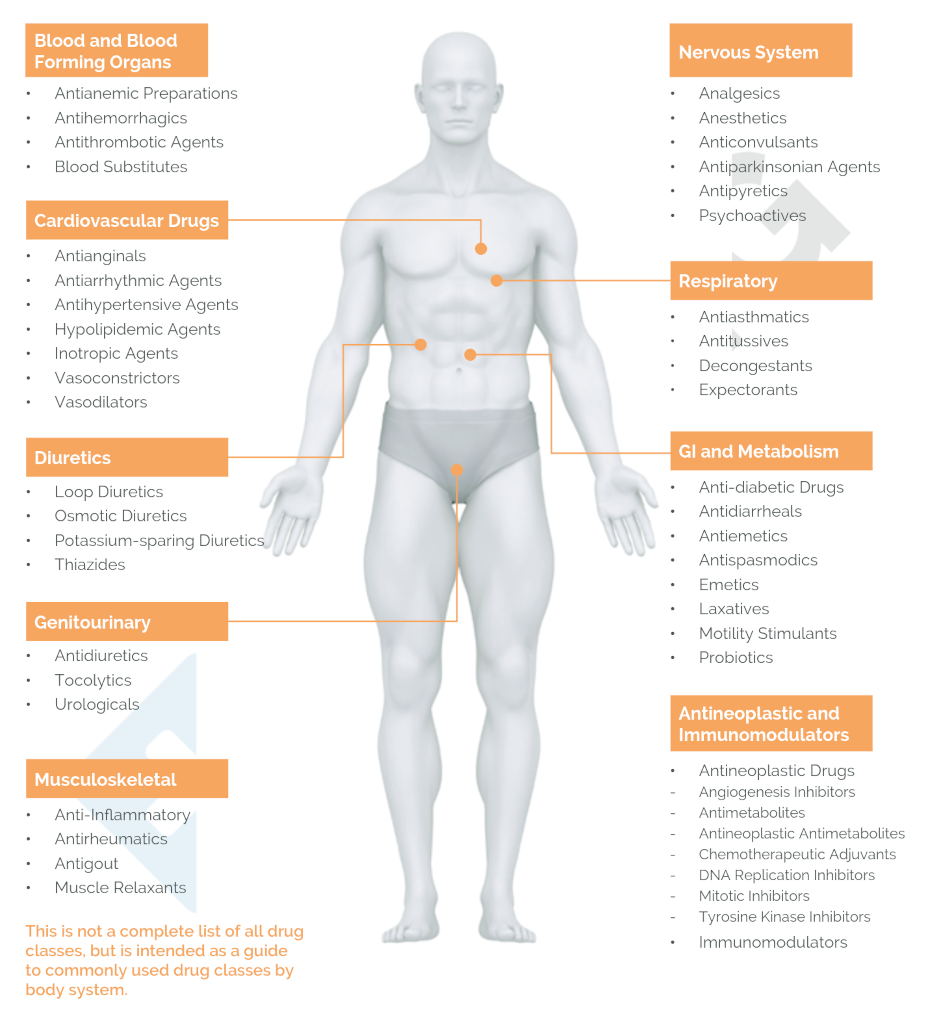
It is often helpful to think of different classes of medications by the main organ system that they are intended to impact, like this:

Photo Credit: NRSNG

There is usually some overlap in which systems are involved. The liver metabolizes many drugs, for example...Everything that you know about Pharmacokinetics is starting to come to the fore now. ☺

How does one temper a seemingly endless cascade of information? It is a matter of obtaining practical knowledge without becoming lost in a mass of superfluous details. Always be open to learning more, but reduce to the essential.

For example, with the most common medications of each type, it is probably wise to have at least a general idea of their effect upon the body (including potential side effects), when and how to safely administer them, and what their antidotes are in case of an overdose.

Sometimes understanding is gained, not by trying to keep everything in our head all at once, but by knowing where to look to find the information that we need precisely when we need it. Keeping helpful information well-organized can determine how quickly we are able to access it and review it. I imagine that nearly all doctors have something like a Merck Manual that they regularly reference for this kind of thing. But to continue with our history taking...

Social History (SHx) is mainly concerned with their lifestyle choices. It is both an opportunity to develop rapport by getting to know them as a person and to form a more complete picture of things that impact their health outside the context of a hospital.

It is at this point that good bedside manners become extremely important. If someone isn't comfortable, they aren't likely to be open and honest, especially if they have some amount of shame or fear about a subject. Creating an emotionally-safe environment is often accomplished by remembering to express simple courtesies and politeness:

• How We Speak To Them

Respecting their human dignity by warmly greeting them, taking the time to introduce ourselves upon first meeting, addressing them by their last name and title instead of only "ma'am" or "sir"

• Ways of Being Considerate

Respecting their privacy by knocking on doors before entering, closing doors behind us whenever necessary, asking them if it is okay if we write out some personal notes when taking a history, being mindful of who is around when sensitive details are shared, closing curtains if they have to disrobe

• How We Treat Them

Respecting their personal space/boundaries by washing our hands and getting consent before touching them, warning them ahead of time of any sensations that may surprise them in regards to examination or treatment, generally anticipating their basic needs

...and so on.

These are practical concerns, as well as ethical and legal ones.

Starting a conversation off with the seemingly mundane (e.g.: job) gives us the opportunity to approach more sensitive subjects. But how do we figure out what type of information to home in on when the conversation seems informal and we have to be aware of time? Let's explore...

In an almost Sherlock Holmes-like fashion, when listening to them talk about their job, we could ask a few simple questions to help us determine if they encounter any relevant occupational hazards. Maybe they regularly do a motion that makes them prone to a particular type of repetitive strain injury, or there is a higher probability that they are exposed to specific toxins within their workplace environment. What stands out in relation to their CC and the symptoms that they have described during the HPI?

To give a couple of examples related to the above scenarios: Winged scapula due to serratus anterior muscle damage from lifting overhead while working in a warehouse? Respiratory and neurological problems (e.g.: coughing, dizziness, syncope, etc.) from inhaling pesticide fumes while gardening? Again, we are looking for connections between their symptoms and their daily life that could explain the CC.

A similar thing can be done with their home and what they do there. Do they have an exercise routine, and if so, what is it like (e.g.: walking, running, yoga/pilates, aerobics, calisthenics, weightlifting, etc.)? What kinds of physical activities do they do that are unrelated to fitness, or are they mostly sedentary? How is their sleep quality (e.g.: do they go to bed and wake up early or late, do they have trouble falling sleep or staying asleep, etc.)? Is their workplace or home a high-stress environment? Or, did the CC seem to appear unexpectedly during a relatively quiet moment of rest?

Literally everything that they say is providing information that is clarifying the nature of their symptoms or inspiring us to ask questions that can.

What do they eat and drink on a regular basis? We can get a general idea of how healthy their diet is by asking them what their meals are like throughout an average week. Inquiring about their dietary habits also gives us a natural way to bring up more private topics that could aid diagnosis, like the color of their urine and the regularity of their bowel movements.

Are they allergic to anything (e.g.: pollen, pet dander, etc.)? There are many common food allergens (like gluten, dairy, soy, corn, tree nuts/peanuts, sesame, egg, shellfish/fish, yeast). But we also have to be aware of more subtle ones, like mold spores and latex allergies. It is especially important to understand if they've had any allergic reactions to previous medications. Allergic reactions are different from both side effects (that are known to be possible) and adverse reactions (that are completely unexpected).

Becoming aware of these types of immune responses is important for uncovering underlying causes / contributing factors to an illness, and for avoiding things like anaphylactic shock when determining an appropriate treatment later.

We are constantly relating all newly uncovered information to what was established previously, while simultaneously developing a comprehensive plan to helpfully address as many of those symptoms as possible. Diagnosis and treatment are always intertwined. If the former is done carelessly, then the treatment based upon it may be worthless or even harmful. As the diagnosis becomes more clear, the corresponding treatment does too.

Something that is sometimes overlooked in the SHx is whether or not they take any vitamin and mineral supplements, herbal remedies, or other kinds of substances which are similar. This is important for tracking down things like unknown allergies, unintentional excesses or deficiencies of nutrients, and contraindications that could affect treatment. For example, it is common to take the herb St. John's Wort (Hypericum perforatum) for depression, but it can lead to dangerous levels of serotonin when combined with SSRIs/SNRIs. It can also alter how other medications are absorbed.

It seems like these interactions are almost like a lost art of Pharmacology that few people know much about. Nutritional Therapy and Phytomedicine are not taught in most med schools, and there are a lot of unconscious biases that can lead to misunderstandings. For example:

A person might believe that "natural" is equivalent to "healthy" without considering the fact that there are plants that are quite poisonous to human beings. Inversely, others (even some doctors) might assume that familiar substances with a seemingly small impact cannot have an accumulative effect, or a larger effect under certain conditions. Yet, the tissues of the body are literally built out of the chemicals in the foods that we eat and many drugs are derived from plants. The concepts of Pharmacology apply to food-like substances too, not only to chemical compounds synthesized in a laboratory.

What else can be indulged in as part of their lifestyle? Do they smoke cigarettes, drink alcohol, or take illicit drugs of any kind? While it is obviously important to know people's illegal drug habits in order to be able to give them the proper care, they might be hesitant to tell you unless they are assured of doctor-patient confidentiality first.

All of these substances should be handled in a manner similar to what we did with their medications (i.e.: names, dosages, reason, etc.). The dosages will probably take the form of average amount per day for however many years that they have partaken in it. Accumulative effects. And again, what organ systems do they impact? Do we have a general idea of how that happens and what to do in the event of an overdose? What are the observable signs of heavy drug use for the most common ones out on the street? If someone is intoxicated, could we recognize the drug(s) that they are on?...Is your Toxicology interest piqued yet? ☺

Beyond chemical reactions, there are also biological ones to consider. Maybe its administration is more likely to expose them to certain infectious agents (e.g.: if someone shares needles while shooting up heroin, they could be exposed to hepatitis B/C, an STD, or HIV).

It is important to avoid any moral judgments, even when it seems like a person is there from a series of poor personal decisions. For example, someone may "self-medicate" in an attempt to suppress pain and become addicted in the process. The psychological coaching or therapy that can help lead them towards healthier habits can be a part of treatment.

This type of continual awareness of the larger context is imperative, not only for treatment of the present illness, but for the prevention of future dangers through screening, both psychological and otherwise. To give another example, when someone has expressed the intention to harm themselves (suicide) or others (homicide), then it is dangerous for them to leave the hospital to act on it. The signs could show up in the history taking and require an "involuntary hold." Do you know how your hospital handles these kinds of procedures?

Sometimes the hospital setting can put healthcare providers in a position where they need to know how to verbally de-escalate tension when emotions run high or to physically defend themselves from someone who is actively violent.

How can we be mentally and emotionally flexible enough to "expect the unexpected"? We might be thrown some curve balls when we regularly interact with the public and must be prepared. Does one know enough about Trauma-Informed Care to recognize when a person who is presently a victim of human trafficking is right in front of them? Or, how about one who is abused at home?

The smell of blood and urine, the screaming and sobbing, the long nights. The realities of healthcare are not always captured by the academic. To give another example...

There are a whole mess of mnemonics used within medical education that do not seem to be all that memorable, more like arbitrary assemblages of letters for complicated lists. If we still struggle to know what each letter is contributing to the overall meaning, then they are not serving their purpose very well. I find that it helps to personalize them, make them silly, and create a little story behind them that links them to the subject matter that they are supposed to explain. To briefly demonstrate:

"When you look at SAGE'S PIC, you get depressed. Maybe he is ugly? Oh, wait..."

Sleep Changes (Less at Night, More during Day)
Appetite or Weight Loss
Guilt, Shame
Energy Low
Suicidal/Homicidal Ideation
Psychomotor Agitation/Retardation (Anxiety or Lethargy)
Interest Gone
Concentration Difficult

"He's not ugly! I looked at it five or more times over the last two weeks. It turns out, it wasn't a photo of him, it was just a list of the DSM-5 criteria for depression." Lol!

Ridiculous? Yes. But you are less likely to forget it versus using some other nonsense like SIG E CAPS...What does that even mean?! Make your own mnemonic stories by creating familiar words out of a seemingly random list of letters.

There is another lesson embedded in this example as well. We went directly from talking about some of the most difficult experiences of the human condition into something lighthearted. Humor can defuse tension, so long as it is playful, not mean-spirited. Think of the difference between a witty observation and biting sarcasm. One shares in laughter, while the other tries to obtain it at another's expense.

Further, it will be the simple joys and tender mercies that hold your heart together and keep you sane in the trials of each day. And the love felt within the moments that you help someone reach wholeness will inspire you to continue in humility, for the work that is done through you to serve others will be touched by God.

Experience can be so varied because people are complex. Another aspect of the SHx that one is likely to explore are questions about their interactions with people and whether or not they have traveled recently.

In both of these instances, we are assessing if they have risk factors that could have exposed them to any type of infectious diseases (i.e.: bacteria, viruses, fungi, parasites, etc.). Did they visit another country and drink from questionable water sources or handle exotic animals? Note how this relates to the question of immunizations, surgeries, and prior hospital visits within the PMHx too. What are the chances of them having an iatrogenic infection and how would we treat the most common ones? Cue your knowledge of Epidemiology and Microbiology. ☺

Asking whether or not they live with someone gives us a way to determine if they have people that we can ask for more information (e.g.: an in-home caretaker, a relative, a romantic partner, etc.), as well as providing a means to segue into questions about sex with little awkwardness. Smooth transitions.

Even if they came in because of an STI, they may still be embarrassed to talk about their sexual activity with someone that they do not know. Sometimes people do not speak honestly about sex, whether that be about the number of partners that they have, the frequency, or their use of protection. They might hide that information from the people that they actually have sexual relationships with too!

If they are a woman, there are some other considerations as well. Are their menstrual cycles regular? While it might sound disgusting to make this analogy, what food or drink item is the texture and color of their menstrual blood? Food, drink, food, drink. It paints a very vivid image. Generally...

Texture and Color of Menstrual Blood
Possible Meaning
(with examples of risk factors in parentheses)
mashed up blueberries
excess estrogen, related to symptoms of PMS
prune juice
low progesterone, related to symptoms of Perimenopause (perhaps trouble with infertility)
thinned out strawberry jam
low estrogen, related to symptoms of Menopause (perhaps fatigue, a risk for bone fracture)
cranberry juice
relatively balanced hormones

Are they on birth control? If they've been pregnant before, were there complications? Did it result in a healthy child, birth defects, or miscarriage(s)? Tread lightly when trying to elucidate these things.

It might seem like we are randomly weaving through different subjects and medical sciences, but the thoughts that come up are related to what we perceive. We do not have to "know everything" to make a constructive impact. Being aware of what is foundational within each field and how they relate to one another is extremely helpful though. What is our purpose for knowing? How will it be applied?

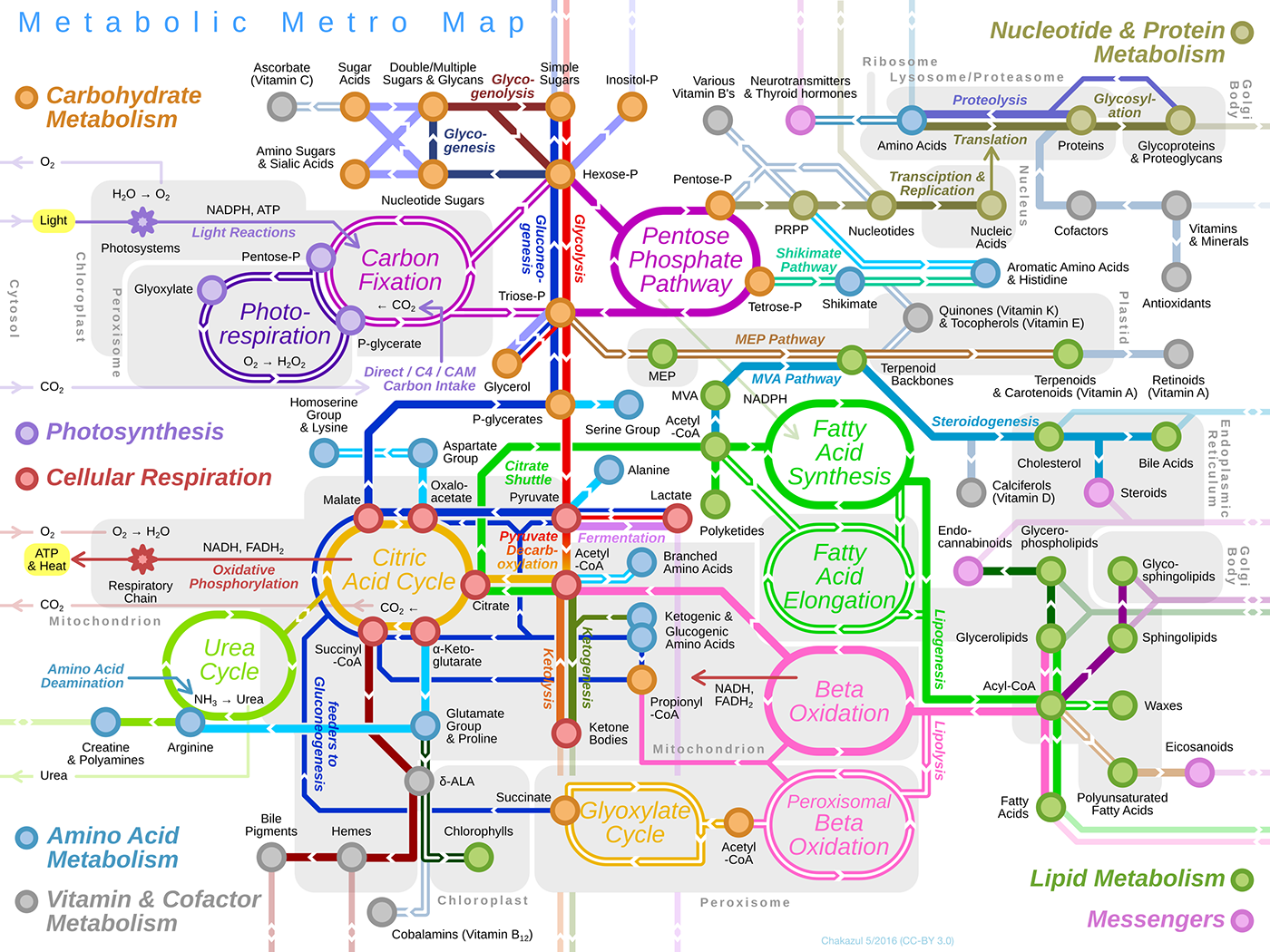
We described before how an understanding of Physiology often revolves around homeostasis, the life-sustaining functions of the organ systems being maintained by feedback loops. The same is true on a cellular level too! This is why their parts are called "organelles." The organs are to the body as the organelles are to the cell. The functions of the organelles are known as "metabolic pathways":

Photo Credit: Metro Map of Metabolism - The Overview

Very aesthetic diagram! The faint boxes in the background represent the organelles (i.e.: nucleus, Golgi body, endoplasmic reticulum, etc.). The different functions are represented by the loops (i.e: citric acid cycle, urea cycle, etc.). It might look incredibly complex because of all of the different chemical reactions that happen inside of each of these processes. Don't worry. It is just an illustrative example and not all of it is directly relevant to human Biology.

Whenever we are faced with something that seems overwhelmingly complicated, we should first look for a point of reference that will help to orientate us. Notice some of the meanings of the little colored circles around the outer edge of the diagram: carbohydrates, proteins, lipids, and amino acids. These are the macromolecules that make up the cell itself.

We obtain these macromolecules through the foods that we eat. Broadly speaking, a balanced diet is comprised of approximately 10-35% lean protein, 20-35% unsaturated fats, and 45-65% complex carbohydrates. When the ratios are highly skewed or the macromolecules are of the improper kinds, then illness is usually the result (e.g.: saturated fat leading to high LDL cholesterol levels and a corresponding increase in risk for heart disease).

The processes that make up the metabolism of the cell can be sorted into two general categories, much like the two types of feedback:

+ "catabolic pathways" that break apart molecules
- "anabolic pathways" that put together molecules

In short, human cells and other microorganisms are performing applied Biochemistry. From our relatively larger vantage point, we learn about it through research in Microbiology. We try to alter those processes through Pharmacology (which overlaps with fields like Nutrition). Meanwhile, Toxicology tries to figure out what disrupts them. There is a fine line between panacea and poison sometimes.

...Hopefully it is becoming ever more apparent that all of the medical sciences that you have learned complement each other and can be integrated together as one whole. They are not actually separate.

But what can we learn from all of this in regards to clinical practice? How is it relevant to refining the DDx? At their root, a ton of seemingly different diseases are actually problems of metabolism. A diagnosis could be aided by uncovering how the metabolic pathways within different kinds of cells are being thrown off balance. To some extent, that will be reflected within the malfunction of the tissues that make up the larger organ systems involved.

Certain symptoms are considered "metabolic" in nature (e.g.: nausea, hypoglycemia, sudden unexpected weight changes, afebrile seizures, etc.). Or, they are part of the cluster of conditions that make up metabolic syndrome itself. What specific functions of each organ system are being disrupted?

We are starting to get into some subtle details that can help us to distinguish between different types of ailments with closely related symptoms. This will naturally happen as we narrow down the possibilities within the DDx.

Family History (FHx) helps us to uncover causes that are congenital, or present since birth. This is usually meant in the sense of inherited genetics, conditions handed down directly through the family line. However, it may also include how they were raised to some extent. For example, their current diet might be a reflection of how they ate when they were growing up, a habit built up over decades and modeled after their parent's example. "Nature and nurture."

When asking general questions about their childhood, keep in mind that some people do not like talking about a past that was painful for them (e.g.: experiences of neglect or abuse). Or, they may simply not remember much about their childhood at all, especially if they have issues with memory.

Whatever the case may be, we are trying to gain a snapshot of the overall health of their family. Did any of their relatives have any similar ailments? What is their relationship to the patient and at what age did they develop that condition? Focus in on their parents and any siblings, as direct influence tends to lessen the further back into the family line that we go. It might be helpful to make a Genogram / Pedigree Chart, a kind of family tree that takes into account more information than just familial relationships (i.e.: marriages, births, etc.). Making one of these does not have to be complicated.

Symptoms that are "genetic" tend to be long-term or tricky to manage (e.g.: affecting multiple organ systems simultaneously). They are also often related to growth and development (e.g.: dysmorphism, attention disorders, etc.). Contrast these with the "metabolic" symptoms mentioned previously.

While such illnesses might seem resistant to change, that doesn't necessarily mean that it is impossible. The expression of genes can be influenced by consistent lifestyle choices and other environmental or external factors (i.e.: epigenetic control). Now, let's recap...


The Three Methods of Diagnosis are Inherent to History Taking

After talking briefly about the CC and HPI, we've covered three more parts of the history with considerable depth: the PMHx, the SHx, and the FHx.

We have done this to try to give a clear understanding of why they help us to diagnose, with a particular emphasis on how a set of symptoms can show us which organ systems and bodily functions are being affected. In practice, our approach will be abbreviated and tailored to the situation at hand. As a result, not all aspects may receive equal focus or be elaborated upon to the same level of depth.

Oftentimes, the bare essentials of history taking are reduced to the acronym/mnemonic, SAMPLE:

Signs + Symptoms
Allergies
Medications
Pertinent Past Medical History
Last Intake (i.e.: food and drug, what and when)
Events Leading Up To Present Illness/Injury

In an emergency and need to be brief? Take a SAMPLE!

Most of the time, history taking will probably be something like doing translation, converting relatively simple descriptions of symptoms into a more precise medical term. They say that they have trouble breathing. But is it a shortness of breath, a tightness in the chest, or something else?

This is when knowing why symptoms appear can be crucial. It helps us to more precisely pinpoint what organ systems are being affected and how. Only then can we effectively treat it. We can't be too attached to our predictions though. One DDx may be exchanged for another if it seems to more accurately reflect the symptoms described by them and any signs that we observe. Sometimes new data can completely change one's perspective. We must give them our full attention and listen carefully.

How can we coax them into elaborating upon their experiences? Reword their descriptions and ask the same questions in different ways in order to elicit more specific details.

Although, there is a balance here. While we need to gather reliable information, we must not grill them as if it were a police investigation. How questions are asked can change the quality of the responses that we receive. If we ask with an accusatory, condescending, or exasperated tone, then the only things that we will probably elicit are silence and frustration.

I once came across an acronym that I have always loved: HALT. Any time that I am feeling frustrated, it reminds me to stop for a moment and ask myself why. Am I Hungry, Angry, Lonely, or Tired? I find it easier to more quickly regain my peace of mind when I have a constructive resolution to work towards. How can we remain sensitive to their experiences as well?

If we don't want to treat others coldly, then we must be mindful of ICE:

Ideas What do they think is happening?
Concerns Do they have any specific concerns (e.g.: afraid of having a terminal illness)?
Expectations What are they hoping to achieve or receive?

An iceberg is often used as a metaphor for something that contains depths, but only a small part of it is visible at any one time. It is an apt description of a person. The patient has a lifetime of experiences that we can only get a vague understanding of by taking a history. We are attempting to create a coherent narrative of how they got here out of a mass of personal details, and then distill it down to the essentials while being considerate and keeping our composure. So, whenever you encounter an iceberg:

HALT! And then take a SAMPLE of the ICE.

Afterwards, summarize it for them using their own words. Then, ask them if they need anything before moving on.

What do we do if they have more than one CC? We focus in on the one that is causing them the most trouble. List them by severity. If they are all equally bad for them, then we must determine if they are related issues (i.e.: symptoms of the same illness) or compounded issues (i.e.: they are dealing with a cluster of long-term illnesses / traumatic injuries of different kinds, multi-system effects).

If it is the latter, then we may need to take separate histories for each and list all of them out in chronological order of when they first appeared. This is why the PMHx is so helpful, not to mention the importance of both having and creating good medical records. What diagnoses and treatments have they already received? Are they working or is it leading to complications?

When taking a history, we don't normally run down a list of yes or no questions. It is better to dialogue about what is going on. Important, yet seemingly insignificant, details tend to surface as a result. It is also more personable.

However, we may go through a Review of Systems (RoS) when we are trying to be thorough. This is a list of symptoms that we can ask them if they have noticed at all. It can help to uncover problems that might have been hidden from their awareness, but it is only done after we have gone through all of the other parts of history taking that we have already described. Again, we do not want to influence their responses.

Even though we had listed out eleven organ systems before, the RoS usually has fourteen categories. This is because some of them are actually subsystems or other aspects that allow us to get more specific details. These fourteen categories are:

RoS Category Symptom Examples
Constitutional malaise, weight loss, fever
Eyes vision changes, double vision, eye pain
Ear-Nose-Throat (ENT) ear pain, sinus pain, sore throat
Cardiovascular chest pain, palpitations
Respiratory shortness of breath, wheezing
GastroIntestinal (GI) abdominal pain, nausea, constipation, diarrhea, vomiting
GenitoUrinary (GU) pain with urination, urinary urgency, vaginal discharge
MusculoSKeletal (MSK) weakness, joint stiffness, joint swelling
Integumentary rash, hives, blisters, bruising
Neurological headache, numbness, pins and needles
Psychiatric depressed, suicidal, homicidal
Endocrine fatigue, cold or heat intolerance, excessive thirst
Hematology abnormal bruising, bleeding gums
Allergy and Immunology swollen glands, hives

It might be helpful to have a little checklist when going through them. Something like this:

Constitutional Eyes ENT Cardiovascular Respiratory
[ ] fever/chills
[ ] nausea
[ ] vomiting × ____
[ ] fatigue
[ ] general weakness
[ ] excessive sweating (diaphoresis)
[ ] night sweats
[ ] changes in weight
[ ] itching
[ ] tearing
[ ] corrective lenses
[ ] blurriness
[ ] discharge
[ ] hearing loss
[ ] ear ringing (tinnitus)
[ ] spinning (vertigo)
[ ] itching
[ ] runny nose (rhinorrhea)
[ ] allergy
[ ] stuffiness
[ ] hoarseness
[ ] sneezing
[ ] nose bleed (epistaxis)
[ ] sore throat
[ ] neck pain
[ ] swollen lymph nodes
[ ] bleeding in mouth/throat
[ ] chest pain
[ ] heart murmurs
[ ] heartbeat palpitations
[ ] shortness of breath lying down (orthopnea)
[ ] cramping in extremities (claudication)
[ ] awakened by shortness of breath (PND)
[ ] leg swelling (edema)
[ ] difficulty breathing during activity (DOE)
[ ] cough
[ ] asthma
[ ] shortness of breath
[ ] pain on inspiration
[ ] wheezing
[ ] bloody mucus (hemoptysis)
[ ] clubbing of fingers
[ ] sputum production - color / quantity / smell
Gastrointestinal Genitourinary Musculoskeletal Integumentary Neurological
[ ] indigestion
[ ] difficulty swallowing (dysphagia)
[ ] diarrhea
[ ] constipation
[ ] yellow skin (from jaundice)
[ ] abdominal pain
[ ] bleeding, oral or anal
[ ] changes in bowel movements (freq., color, blood)
[ ] urgency
[ ] excessive urine (polyuria)
[ ] painful urination (dysuria)
[ ] waking up to urinate (nocturia)
[ ] lesions
[ ] blood in urine (hematuria)
[ ] discharge
[ ] incontinence

Last Menstrual Period - timing, regularity, number of days, flow, pain

Total number of pregnancies (gravidity) ____
Number of births after 20 weeks (parity) ____

[ ] painful intercourse (dyspareunia)
[ ] pregnant
[ ] pain
[ ] redness
[ ] swelling
[ ] joint pain (arthralgia)
[ ] normal range of motion
[ ] instability
[ ] itching
[ ] rashes
[ ] lumps
[ ] sores
[ ] insect bites
[ ] blue skin (cyanosis)
[ ] fainting (syncope)
[ ] slurring of speech
[ ] weakness in specific body part (focal weakness)
[ ] neck stiffness
[ ] decreasing sensation
[ ] numbness
[ ] tingling
[ ] head trauma
[ ] loss of consciousness
[ ] headache
[ ] confusion
[ ] lightheadedness (pre-syncope)
[ ] changes in vision
Psychiatric Endocrine Hematology Allergy / Immune
[ ] stress
[ ] anxiety
[ ] depression
[ ] memory deficits
[ ] mood changes
[ ] breast skin changes
[ ] nipple discharge / bleeding
[ ] breast pain
[ ] breast masses / lumps
[ ] bruising
[ ] small blood spots (petechiae)
[ ] large blood spots (purpura)
[ ] fatigue (from anemia)
[ ] swollen glands
[ ] hives
[ ] sneezing
[ ] watery eyes (epiphora)

These lists are by no means exhaustive, but they give a good overview of the kinds of things that we would be looking for. What system seems to be most affected? Once this is understood, then we would go on to the Physical Exam.


The Physical Exam

The full Physical Exam is divided into three parts: the General Exam, the Regional Exam, and the Special Exam. It serves to test the physiological functions of their body by using a variety of techniques and tools. These tools may include:

• a stethoscope for listening to the sounds of the heartbeat, breathing, digestion, etc.
• an otoscope for looking into the ear canal
• an eye chart for testing vision
• a reflex hammer for tapping different points on the body
...etc.

Remembering what we said about hand washing and consent, it is also a time to engage more of the senses directly in diagnosis. For example, looking more closely (inspection), feeling (palpation), hearing (percussion and auscultation), etc. Match up the symptoms described to the signs observed.

We can start to assess what is going on inwardly (e.g.: by literally checking to feel if an organ is inflamed by searching for tenderness or swelling). We must be gentle and mindful. This relatively closer contact may also require personal protective equipment to prevent the spread of infection (i.e.: masks, gloves, etc.).

The General Exam begins by looking at their "build," observations about broad physical attributes and characteristics. Are they so skinny that they are emaciated, or do they have excess weight to the point of obesity? What is their personal hygiene like? Do they look disheveled? Notice any peculiar smells? Are they tall or short in stature? Are they hunched over?

Of course, we would not comment out loud about any of these things. We do not want to be offensive, only obtain data. Therefore, we would just observe them and quietly make a note of it.

It is followed by assessing their "decubitus." Technically, this means how they lie down (e.g.: supine on their back, prone on their stomach, or on their side - and which side, their left or right?). We might also include their posture when sitting or standing, as well as their gait when they walk. Do they take long, easy strides or do they shuffle around, dragging their feet?

Then, we have their "affect" or "mood." Do they gesticulate a lot when they speak, both lively and animated? Or, do they seem timid and reserved? What is their overall demeanor (i.e.: do they seem happy, sad, frustrated, or some other emotion)? Body language and facial expressions speak volumes. No words required.

After that, we start to measure their basic vital signs, usually in the following order:

Temperature (T)
Heart Rate (HR)
Respiratory Rate (RR)
Blood Pressure (BP)

Sometimes, we might also include Blood Oxygen Saturation (SpO2), or other measurements like Body-Mass Index (BMI) and Blood Glucose Level. Here, we are going to focus mostly on the first four.

The "normal" values for each of these is approximately:

• 98.6 degrees Fahrenheit (37 degrees Celsius) for Temperature, but it can vary a little depending on where and how it is taken (e.g.: oral, rectal, etc.)

The next few vital signs vary a bit more depending on age, changing slightly with growth of the body.

Age
Heart Rate
(beats per minute)
Respiratory Rate
(breaths per minute)
Blood Pressure
Premature
120 - 170
40 - 70
55-75 / 35-45
0-3 months
100 - 150
35 - 55
65-85 / 45-55
3-6 months
90 - 120
30 - 45
70-90 / 50-65
6-12 months
80 - 120
25 - 40
80-100 / 55-65
1-3 years
70 - 110
20 - 30
90-105 / 55-70
3-6 years
65 - 110
20 - 25
95-110 / 60-75
6-12 years
60 - 95
14 - 22
100-120 / 60-75
13+ years
60 - 100
12 - 20
140 / 85

• > 96% Blood Oxygen Saturation, hovering anywhere between 95% - 100%

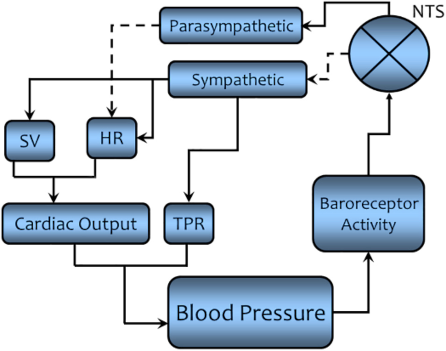
Some might take these vital signs for granted, not realizing the vast amount of information that is enfolded within them. Remember homeostasis? The normal range of a value is known as its "set point." The feedback loops of the organ systems keep the oscillations of the body within the boundaries of this set point. For example, here is a schematic representation of the feedback loops that control arterial blood pressure:

Diagram and Description Adapted From: Homeostasis by George E. Billman

[Above image: "HR" stands for "heart rate," the number of beats per minute due to ventricular contraction. "SV" stands for "stroke volume," the total amount of blood ejected from the heart with each of those contractions. "TPR" stands for "total peripheral resistance," the resistance to the flow of blood. The resistance is greater the smaller the diameter of the blood vessel (e.g.: the narrowing of a blood vessel caused by plaque from atherosclerosis). The solid arrows describe connections where those aspects of the system are directly related (i.e.: an increase in one will lead to an increase in the other, and vice versa). The dashed arrows describe connections where those aspects of the system are inversely related (i.e.: an increase in one will lead to a decrease in the other, and vice versa).

"NTS" stands for "nucleus tractus solitarius," a cluster of neurons in the medulla oblongata which act like a pressure sensor for the Cardiovascular System. They are a "barostat," similar to how the thermostat in your home detects room temperature.]

The vital signs are giving a lot of information about the state of these systems. To elaborate a little...

Heart Rate is actually one aspect of a more general category of "Pulse," which includes many other characteristics of the Cardiovascular System. For example, is a person's heartbeat of equal strength on both sides of their body? (Equality) What is the pattern of the beating? Is it steady and consistent, or is it erratic? (Rhythm) Some of this information can be sensed by touch alone, but we usually rely on devices like EKG machines to try to get a clearer picture of it.

A similar thing is true of Respiration Rate and the Respiratory System. Respiratory Rate is best understood in relation to Tidal Volume, the actual depth of each breath. A breath could be fast or slow, while also being either shallow or deep. Together, they form a category known as "Ventilation." Like the heart, breathing also follows a rhythm that can be visualized by the waveform on a ventilator.

When the underlying feedback loops are interrupted or inhibited in some way, then problems arise. Notice what happens when each of the vital signs starts to leave their set point in either direction:

A Heart Rate that is fast (tachycardia) or slow (bradycardia)?
A Respiratory Rate that is fast (tachypnea) or slow (bradypnea)?
A Temperature that is high (hyperthermia) or low (hypothermia)?
A Blood Oxygen Saturation that is high (hyperoxia) or low (hypoxemia)?

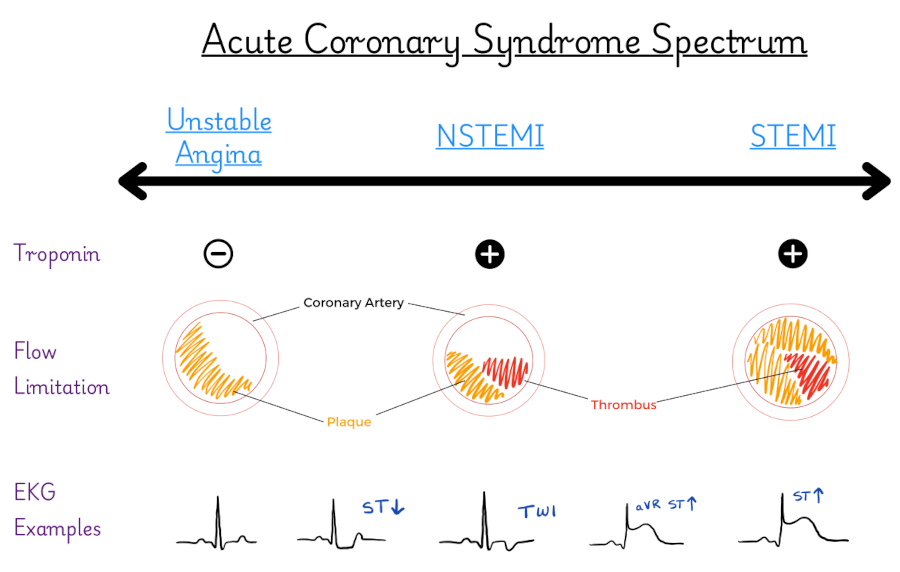
They all exist on a continuum between a state of balance and a state of imbalance. Therefore, those imbalances can be symptoms of diseases that also exist on a spectrum. For example:

Photo Credit: The Clinical Problem Solvers

We highlight this point to reiterate the importance of thinking in terms of organ systems and how their functions sustain health. How do we facilitate that through treatment? Disease is a deviation from it. It is easier to keep all of it organized within our mind when we approach it as a spectrum of effects, not a jumble of hundreds of seemingly different diseases.

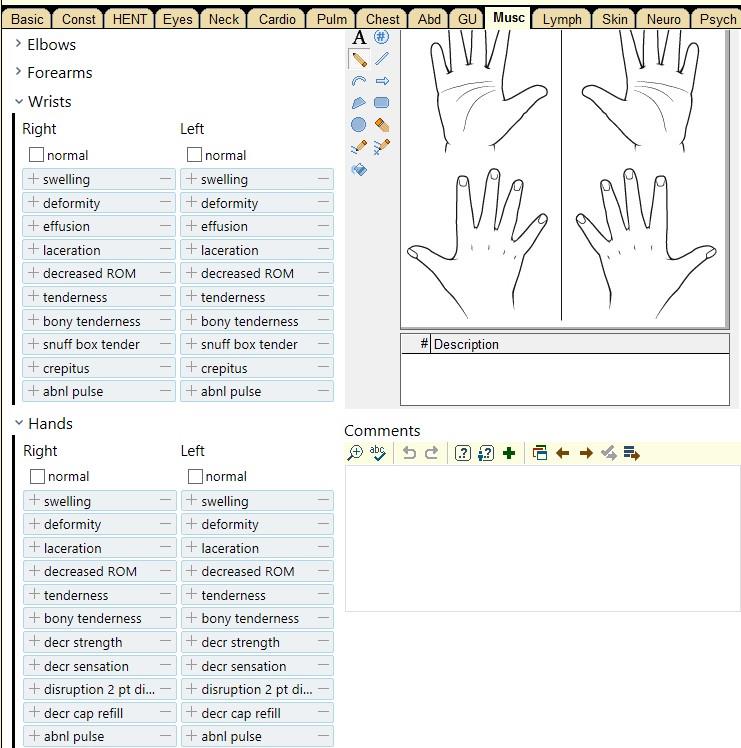
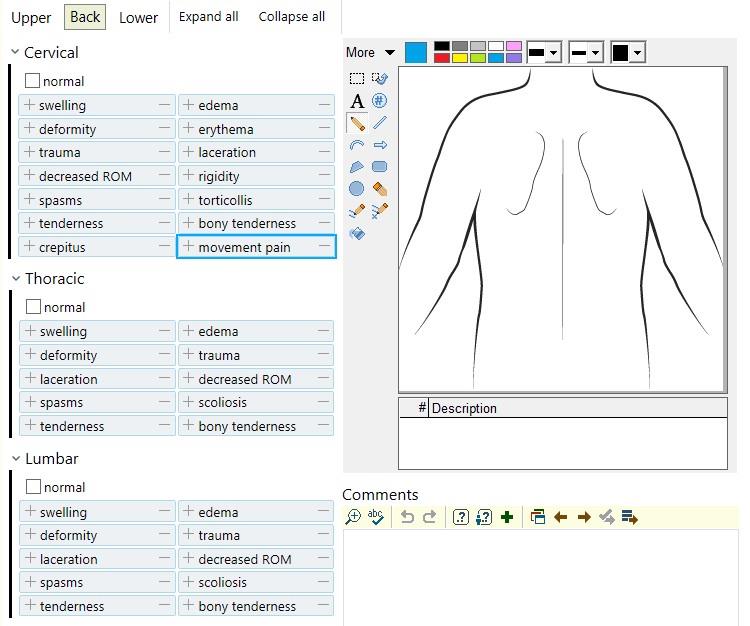
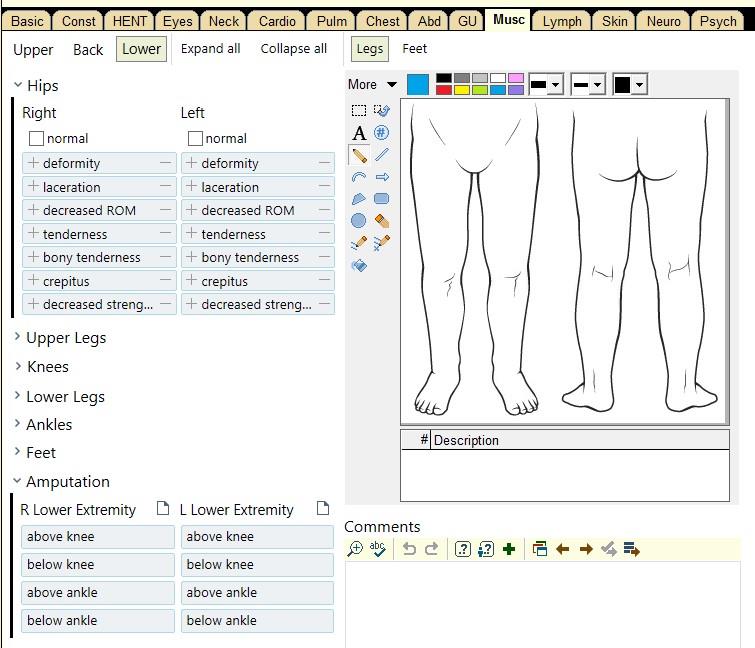
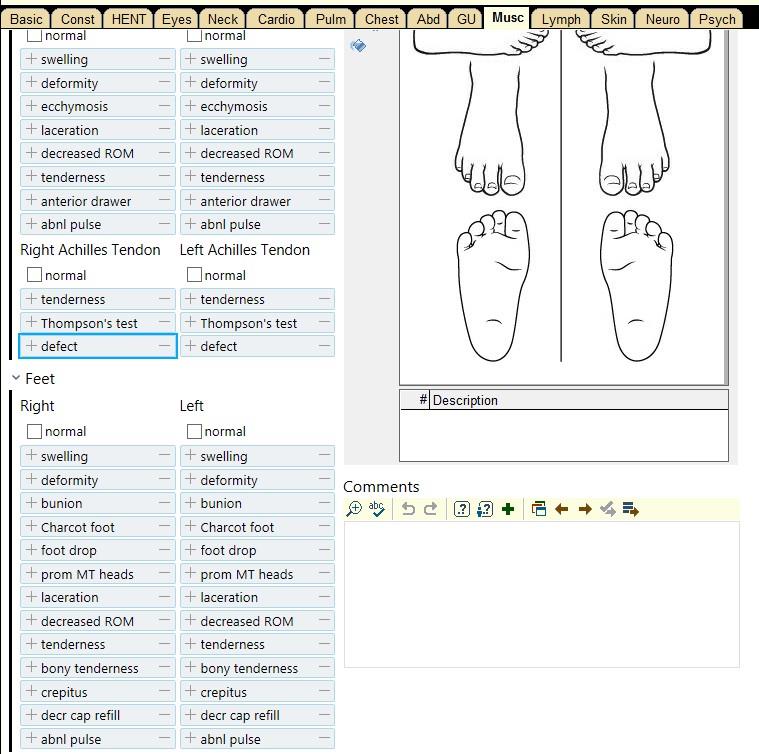
The next part of the Physical Exam is the Regional Exam. It is similar to the RoS, but instead of only questioning them about the symptoms that they observe within themselves, we look for signs and test the physiological functions of each system directly. The categories are slightly different and many of the tests revolve around the Nervous System. We won't go through each of these in-depth, but will provide a simple checklist that one might use to keep track of testing results as they go through them:

General Head Eyes ENT Cardiac
[ ] normal hygiene
[ ] normal affect
[ ] appears own age
[ ] no acute distress
[ ] no scars / bumps
[ ] no deformities
[ ] no trauma
[ ] pupils equal / round
[ ] reactive to light
[ ] no icterus
[ ] no conjunctival injection
[ ] no papilledema
[ ] normal hearing bilaterally
[ ] no nasal discharge
[ ] proper dentition
[ ] moist mucous membranes
[ ] no erythema
[ ] no exudate
[ ] no lymphadenopathy
[ ] trachea midline
[ ] regular rate / rhythm
[ ] no murmurs / rubs / gallops
[ ] normal distal pulses
[ ] no JVD
[ ] normal capillary refill
[ ] no leg edema
[ ] no varicose veins
Pulmonary Abdominal Genitourinary Skin Mental Status
[ ] normal tactile fremitus
[ ] clear to percussion
[ ] clear to auscultation
[ ] normal bilateral entry / effort
[ ] no wheezes / rales / rhonchi
[ ] normal bowel sounds
[ ] no aortic / renal bruits
[ ] normal percussion
[ ] abdomen soft / non-tender
[ ] no distension / fluid
[ ] no hepatomegaly
[ ] no splenomegaly
[ ] no hernias
[ ] no cuts / lesions
[ ] no rashes / ulcers
[ ] no lymphadenopathy
[ ] no discharge
[ ] no bleeding
[ ] no masses / induration

Male:
[ ] no scrotal masses
[ ] no testicular swelling
[ ] normal cremaster reflex

Female:
[ ] normal speculum exam
[ ] normal bimanual exam
[ ] no scars
[ ] no rashes
[ ] no bruises
[ ] no masses
[ ] awake
[ ] alert
[ ] oriented × _____/3
[ ] normal memory
[ ] command following
[ ] normal repetition
[ ] no aphasia
[ ] no dysarthria
Cranial Nerves Strength Reflexes Sensation Cerebellar
[ ] II: 20 / 20 visual acuity in both eyes, visual intact, and primary pupillary reaction to light
[ ] III, IV, and VI: EOMI, no nystagmus
[ ] V: normal sensation, masseter and temporalis muscles intact
[ ] VII: able to wrinkle forehead, smile, and close eyes normally
[ ] VIII: hearing loss intact and equal bilaterally
[ ] IX and X: palate rises equally, and uvula is midline
[ ] XI: normal shoulder shrug and SCM muscle
[ ] XII: tongue is midline and normal movements
[ ] normal muscle tone / bulk
[ ] normal range of motion upper extremity
[ ] normal range of motion lower extremity
[ ] no pronator drift

_____/ S L upper extremity
_____/ S R upper extremity
_____/ S L lower extremity
_____/ S R lower extremity
Biceps
L_____R_____
Triceps
L_____R_____
Brachioradialis / Supinator
L_____R_____
Patellar
L_____R_____
Achilles
L_____R_____
check pain, temperature, touch, and vibration

upper proximal
[ ] L [ ] R
upper distal
[ ] L [ ] R
lower proximal
[ ] L [ ] R
lower distal
[ ] L [ ] R
[ ] normal finger to nose
[ ] normal heel to shin
[ ] normal gait
[ ] tandem gait
[ ] negative Romberg
[ ] rapid alternating movements

The final part of the Physical Exam is the Special Exam. It homes in on the system that seems to be the most affected. In the Regional Exam, each of the tests are somewhat abbreviated in form and we exclude testing the most affected system. The Special Exam is an opportunity to go through that specific system more thoroughly. We have been whittling away at the DDx all the while, maybe even cross-referencing several DDx for each sign/symptom to see what known disease patterns are common among them. Through a systematic process of elimination, we can come up with a more highly refined composite. Filter out all irrelevant or incorrect information that was obtained during history taking.


Diagnostics

After the Physical Exam, we come to the use of Labs and other diagnostic tools like Imaging. The purpose of diagnostic tests is to remove doubt and build a stronger case. We are trying to transform our provisional DDx into a final Diagnosis (Dx) in preparation for Treatment (Tx).
The reliability of a test depends upon two factors:

1. Sensitivity - a stronger likelihood that a person has that ailment when the test results are positive
2. Specificity - a stronger likelihood that a person does not have that ailment when the test results are negative.

While no test is "perfect," the better its sensitivity and specificity, the less of a possibility of "false positives" and "false negatives." In other words, it should not produce a positive result when it should be negative, or vice versa. The former is to treat something that isn't actually there, while the latter is an illness or injury that remains undetected or "occult."

The sample that we take for a lab test depends on the system affected or the nature of the illness (e.g.: saliva, blood, urine, feces, a biopsy of a certain type of tissue to check the cells, etc.). For example, if they have the symptoms and signs of a bacterial infection, but we don't know what kind of bacteria to treat for, then we can do a Gram stain to help narrow down the possibilities. As long it is an appropriate test for detecting whatever it is that we are trying to find, it can bring more certainty to the DDx.

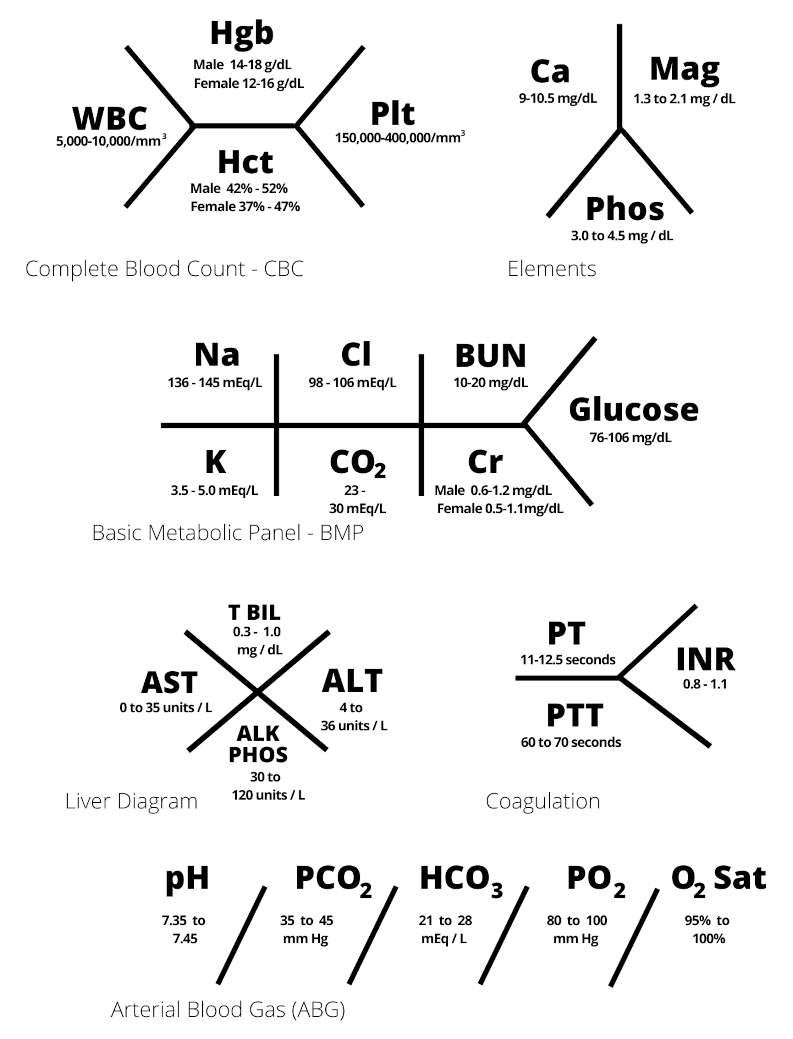
Like we saw with the negative feedback loops which stabilize the different vital signs, the various biochemicals within the body are also held within certain set points. Different kinds of lab tests can help us to determine which ones are becoming unbalanced and why. Here are several different types of tests and the general ranges that the biochemicals that they test for would normally be in:

Photo Credit: ???

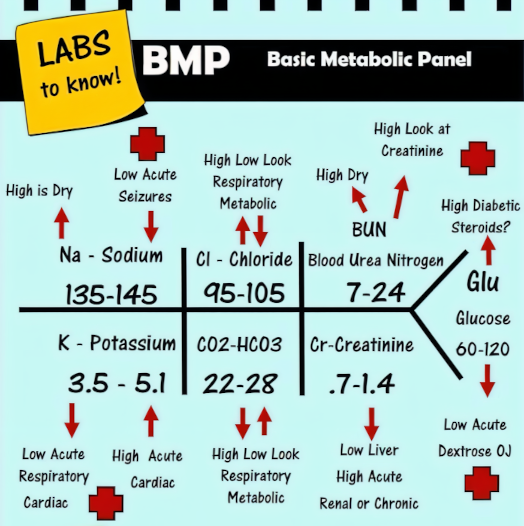
Again, what happens within the different organ systems when those values become high or low? For example:

Diagram adapted from: The Nurse's Notes

In the case of electrolyte balance within the bodily fluids (such as ions of sodium and calcium), we can get an idea of which tissues are being affected by thinking of how solutions usually move from an area of high concentration to ones of low concentration. Therefore, fluctuation of these different values up and down gives us a peek inside of the body and into the functioning of the different organ systems.

As another example, consider the process underlying the production and excretion of bilirubin within the body:

bilirubin is formed from the breakdown of hemoglobin in red blood cells

unconjugated bilirubin is transported to the liver

unconjugated bilirubin is conjugated by two enzymes in the liver

conjugated bilirubin is excreted by the liver trough the bile ducts into the duodenum; most is excreted in the stool

some bilirubin is unconjugated within the intestines through another enzyme and reabsorbed through enterohepatic recirculation

intestinal bacteria break down conjugated bilirubin into stercobilin that is more easily excreted

It is okay if the details behind this example are not entirely clear, we just want to emphasize the fact that understanding these kinds of biochemical pathways within each organ system can help us with diagnosis. At what point is the process failing? In this case, different diseases are implied by a malfunction within each step of that process, but jaundice is a symptom of all of them. Diseases can have completely different causes, yet share symptoms because they impact the same system(s) or function(s). This is why the ailments within a DDx are related to one another.

Similar to the lab tests described above, the use of imaging helps us to get another look inside of the body. The choice of imaging is based on a variety of factors.

Sometimes it is a matter of clarity. For example, an ultrasound might not provide enough resolution to be able to see important details. Inversely, in some instances, a sharper image is not always "better." Because very fine details show up within an MRI, one might interpret a problem to be more significant than it actually is. One example might be a hairline fracture that will heal normally all by itself without any intervention other than RICE: Rest, Ice pack, Compression wrap, and keep it Elevated.

Other times, the choice of imaging technique is about availability. As another example, the equipment for doing CT scans is prohibitively expensive for many hospitals and patients. It may not be available in a rural hospital or within a community with scarce resources.

The choice could be about urgency. In situations that are particularly traumatic, action must sometimes be taken before more elaborate forms of imaging can be done. There simply isn't enough time to wait. At best, one may have to rely soley on Point-of-Care Ultrasound (POCUS).

There are also concerns about safety. If someone is already in a weakened state, a high dose of ionizing radiation, say from an X-ray, might exacerbate the problem. One must sometimes do a cost-benefit analysis, carefully weighing the pros and cons of each option. There are many aspects to consider. [For a very brief summary of how one might approach these considerations see Dr. Kenil Shah's book The Ultimate Interpretation Handbook.]


Final Assessment

After we have gathered as much information as we possibly can, we are finally ready to finalize our Dx. First, we might run through a broad overview of the different kinds of diseases that are possible in order to make sure that nothing has been forgotten or overlooked. This can be done by remembering our VITAMINS A, B, C, D, E, and K. While it is important to be properly nourished, we are not simply listing out the known vitamins. It is actually a mnemonic phrase for disease types [formulated by Zabidi A Zabidi-Hussin]:

Possible Causes Comments
Vascular Vessel (bleed or blocked); anything Hematology related
Infectious includes post-infectious syndromes
Trauma anything related to mechanical factors, like pressure or obstructions
Autoimmune / Allergy
Metabolic affecting aforementioned macromolecules and micronutrients
Idiopathic / Iatrogenic of unknown origin or medically induced
Neoplasia whether benign or malignant
Social abuse, deprivation, etc.
Alcohol-related
Behavioral as in psychosomatic disorders
Congenital present from birth
Degenerative or Drug-related
Endocrine / Exocrine
Karyotype more specifically genetic in nature

Then, we can consider what evidence contributes to each part of the DDx, and order the possibilities within the DDx by most likely to least likely based on an overview of all of our findings. We might consult with experienced colleagues and use various clinical scoring systems to help us do this. Clinical scoring systems are algorithms that assist us in reasoning through clinical decisions by pointing out various risk factors, especially when caring for people who are critically ill. Here are some of the most common ones and what they are used for, generally organized by organ system [adapted from a list by Sandeep Bala]:

Organ System or Problem
Clinical Scoring System
(click name for related calculator)
Purpose When To Use
Neurological
Glasgow Coma Scale (GCS)
Mental status assessment based on eye, verbal, and motor responses With good reliability between observers, used for serial evaluation of mental status; also can be helpful for prognosis in certain conditions
NIH Stroke Scale (NIHSS)
Quantifies severity of stroke in acute setting based on physical findings alone Use in acute setting to determine severity and estimates long-term prognosis after an acute stroke
Cardiovascular
CHA2DS2-VASc
Estimates stroke risk for patients with atrial fibrillation and suggests need for pharmacotherapy To risk stratify patients with atrial fibrillation by risk of stroke and to guide the decision to start anticoagulation. Helpful to compare to HAS-BLED score (see below)
Framingham "Hard" CHD Risk Score
Estimates 10-year risk of myocardial infarction (MI) or coronary death in individuals without prior heart disease, intermittent claudication, or diabetes Used to estimate 10-year risk for MI/death for patients without previous cardiac events; can be helpful in the management of hyperlipidemia and in assessing if primary prevention with aspirin would have benefit
HAS-BLED Score
Estimates risk of major bleeding for patients with atrial fibrillation on anti-coagulation In concert with CHA2DS2-VASc, used to guide the decision to start anti-coagulation in patients with atrial fibrillation
HEART Score
Estimates 6-week risk of major adverse cardiac events in patients ≥ 21 years-old presenting with symptoms suggesting acute coronary syndrome To guide decision in emergency department if patients can be discharged or if need additional testing or admission by stratifying patients into low, moderate, and high-risk groups
Revised Cardiac Risk Index (RCRI) for Pre-Operative Risk
Estimates 30-day risk of death, MI, or cardiac arrest after non-cardiac surgery To help risk stratify patients prior to surgery and to allow for shared decision making, especially in those with additional risk factors
TIMI Risk Index
Estimates 30-day mortality risk in patients with acute coronary syndrome based on age, blood pressure, and heart rate Use to risk stratify patients and guide initial therapy
Wells' Criteria for Deep Vein Thrombosis (DVT)
Estimates risk of DVT in patients, particularly in emergency and outpatient settings Use to exclude need for lower extremity duplex ultrasound in low risk patients
Respiratory
PERC Rule for Pulmonary Embolism (PE)
Estimates risk of PE to be < 2% when all criteria are negative and pre-test probability is low (< 15%) To rule out need for additional testing for PE based on clinical criteria alone
Wells' Criteria for Pulmonary Embolism (PE)
Estimates risk of PE in emergency department settings To risk stratify patients and exclude need for additional testing such as a CT angiogram in low risk patients
Digestive (Liver)
Child-Pugh Score
Estimates prognosis of patients with cirrhosis and approximates abdominal surgery peri-operative mortality Used to determine prognosis and in listing for transplantation
Maddrey's Discriminant Function
Estimates short term prognosis in patients with alcoholic hepatitis and benefit of steroid therapy To evaluate severity of alcoholic hepatitis and guide decision on steroid administration
MELD / MELD-Na
Estimates 3-month mortality in patients > 12 years old with end-stage liver disease For stratification of patients for liver transplantation and prediction of mortality in specific clinical scenarios, such as non-transplantation surgeries
Urinary (Kidney)
RIFLE Criteria
Classifies severity of acute kidney injury by GFR and urine output To determine severity and prognosis of acute kidney injury
Infectious Disease
Centor Score
Estimates probability of strep pharyngitis in acute pharyngitis of < 3 days onset and recommends next steps To determine need for testing and empiric antibiotic treatment for acute pharyngitis secondary to Streptococcal pyogenes
CURB-65 Score
Estimates 30-day mortality of community-acquired pneumonia To help determine if patients can be treated outpatient versus inpatient, with consideration for ICU admission
qSOFA Score
Predicts risk of mortality in hospitalized patients with suspected infection outside of the intensive care unit based on bedside findings Use at the bedside to prompt additional monitoring,testing, and/or treatment of patients with possible severe infections (sepsis)
SIRS / Sepsis / Septic Shock Criteria
To classify infection status in patients with suspicion of SIRS, sepsis, or septic shock Used as a screening or triage tool to identify patients who may need to be initiated on a sepsis protocol

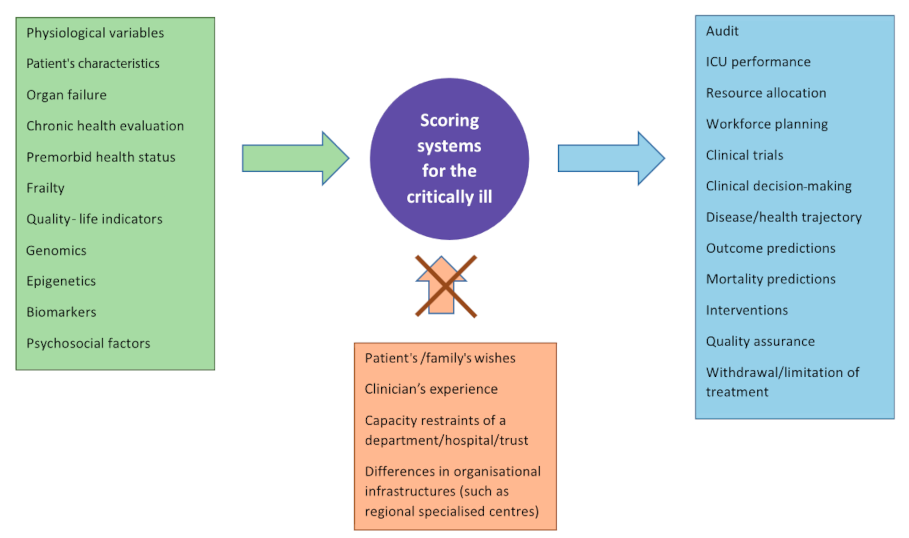
To look at clinical scoring systems in general for a moment:

Photo Credit: Scoring Systems in the Critically Ill by N. Desai and J. Gross

[Above image: The green box to the left contains factors that are often accounted for by these types of algorithms, while the blue box shows the kinds of factors that they can impact. The orange box on the bottom contains factors that usually remain unaccounted for.]

The DDx was a hypothesis that we tested, whereas the Dx is the conclusion that we have drawn as a result. Hopefully, all of the following aspects of the problem have now been fully defined:

1. Etiological Dx - the specific causes of the disease within the patient's personal history
2. Anatomical Dx - where specifically in their body it is manifesting
3. Functional Dx - what organ system processes are being affected and how
4. Complications of Dx - all other diseases or related risk factors that are present

Despite all of the work that may have been carried out in order for us to get as accurate a Dx as we can, there are still limits to this entire process, such as:

• imperfect models (of bodily functions, diseases, etc.)
• undetectable (or hidden) aspects of health and disease
• misinformation, errors (including incorrect medical records, inaccurate diagnostic tests, etc.)
• natural variations between people, circumstances (e.g: a disease that looks different for different people, or looks different within the same person at different times)
• clinical workplace problems (e.g: high stress, limited resources, burn out, etc.)

As long as we try our best to make those conditions better whenever we reasonably can, that is okay. Use discernment without giving in to worry. Some of the most difficult times require that we trust in God, that there is an underlying order and purpose that will ultimately lead to the flourishing of life.

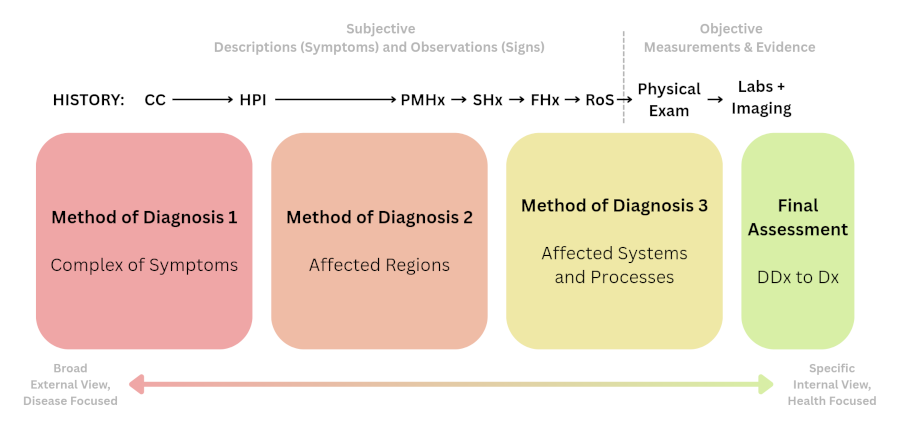
I will try to provide a general summary of everything that we've covered thus far within a single diagram:


Notice that we began with a broad, external view of the person centered on trying to understand the nature of any illness or injury that was present through Pathology. And we eventually ended on the specifics of their inner workings, with a focus on how to facilitate healing through an understanding of Physiology. As we did so, we systematically went from large scale to small scale, passing from gross Anatomy, to Histology, to Cytology and Microbiology, and the Biochemistry that these microorganisms carry out.


Treatment Plan (Present & Future)

As per the Hippocratic Oath, one should always genuinely try to "do no harm." Therefore, choices are always made with consideration for, and the consent of, the person. This includes everything that would normally be covered within the concept of Person-Centered Care.
In terms of treatment, what must be stopped, started, and/or continued in order to help heal every problem? How can all of this be done safely? State all options up front, but only recommend the treatments that are the least invasive and the most effective before recommending ones that are more invasive and less effective. There may be various kinds of trade-offs that must be carefully explained to the patient (and possibly their families). Also be aware of personal biases in recommending treatments. What constitutes "good" evidence?

For situations that are very complex or filled with unknowns, the best that we may be able to do is attempt to manage it through palliative care, while learning more in order to try to find a relatively safe and effective treatment. We want to avoid causing any sort of irreversible damage by acting recklessly (out of pride, stress, etc.). An incredible level of trust and responsibility is involved within all forms of healthcare.

There are many treatment options, depending on the type of injury or illness that they address. Some of them are very interesting to me personally, such as Electrotherapy. To give a couple of examples:

• pain relief through Transcutaneous Electrical Nerve Stimulation (TENS)
• treating psychological and neurological problems through Transcranial Magnetic Stimulation (TMS), among many other techniques
...etc.

Diathermy (something like an electrified scalpel) is regularly used within surgery to cauterize cuts as they are made, unless blunt dissection would be more appropriate (e.g.: to carefully avoid sensitive tissues, like arteries and nerves). We can also use electrical stimulation to speed up wound healing, to help someone who is convalescing after surgery or who has received a wound by some other means. This includes treatment of chronic wounds, such foot ulcers from diabetes.

Like ozone and other methods of disinfection, we can use electricity to sterilize medical equipment. It may even be possible to use electricity to non-invasively handle various infectious agents present within the blood and lymph (e.g.: based on the work of Drs. William Lyman and Steven Kalli), but that type of work remains somewhat obscure.

We could go on and on about treatments that seem promising, but rather than explore those treatments here, I will make a few comments about treatments in general.

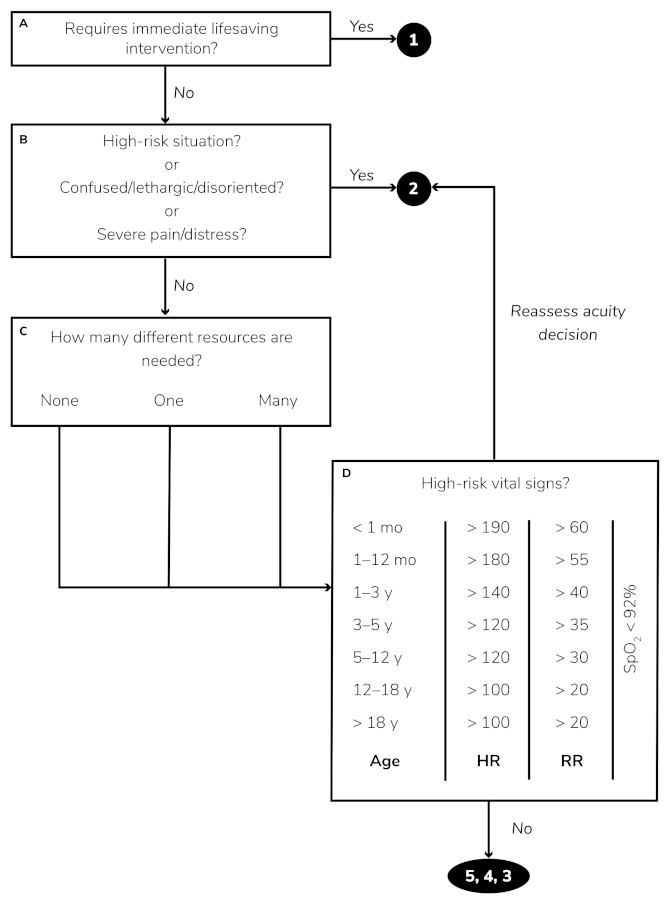
The full diagnostic process that we've covered is not always used before delivering care. In fact, it will probably be reserved for only the most complex of cases where they have at least some level of stability. In an emergency situation, a triage protocol that can be rapidly carried out will be done instead, such as the Emergency Severity Index (ESI). We won't cover it in-depth, but to give an example flowchart of the reasoning that it follows:

Photo Credit: ESI Handbook (5th Edition)

These kinds of concerns are often approached as a simple mnemonic, ABC. It is meant to be easily recalled under high-stress situations, such as providing basic life support to someone who is in critical condition (e.g.: with acute trauma, high risk of mortality). The "ABC" also implies that it is fundamental and should be done first.

Ironically enough, the first thing that should be done is often mentioned within first aid and learning materials aimed at EMS, but can be easily forgotten in the moment: assess the environment.

For example, it might not be safe to touch someone who has been electrocuted if they are still next to a live wire. Once the danger has been removed, then it could be safe to act. Perhaps those concerns are less prevalent in a hospital.

However, sometimes the trauma is severe enough that the person cannot be moved in any way without causing more damage (like with some head, neck, and back injuries). The damage may even be so extreme that we should not approach them from outside of their field of vision or call out to them in order to get their attention. If they are startled and jerk their head in response, it could be permanently paralyzing or fatal if they have certain types of cervical vertebrae injuries.

If that is not the case, we might check their state of consciousness using something like the AVPU scale:

Alert
responding to Verbal stimuli
responding to Painful stimuli
Unconscious

And then, if necessary, we can carefully get them into "safety position" (i.e.: supine on back, head and limbs aligned with body). From there, one would do the ABCs. To give a very brief summary:

Airway - checking that their airway is "patent," or clear of any obstructions

This might be accomplished through different "maneuvers," like a purse maneuver (carefully pinching the mouth open to look) or a head-tilt, chin-lift maneuver. If there is injury, then that technique might have to be modified (e.g.: performing a jaw thrust instead).

Breath - checking that they are actually inhaling and exhaling

Circulation - checking for a pulse

If these are absent, then we would start performing CPR. With the proper timing, technique, and equipment, one could even help to prevent severe brain damage from hypoxia by performing Neuroprotective CPR.

The purpose of this summary is not to give instruction on how to do these things, simply to highlight several important points:

What is done is based on what is perceived, and how it is done is adapted to the situation at hand. This process is refined and repeated until they are able to sustain themselves. We are literally acting as the feedback loops that keep their vital signs within the set points that support life. Pretty much all treatments are similar in that regard.

In this case, we are attempting to balance their Respiratory Rate and Heart Rate by partially taking over a couple of the functions normally carried out by their Respiratory and Cardiovascular Systems. Notice how interconnected these organ systems are and how the different parts of ABC handled them. Let's go through a slightly more involved example...

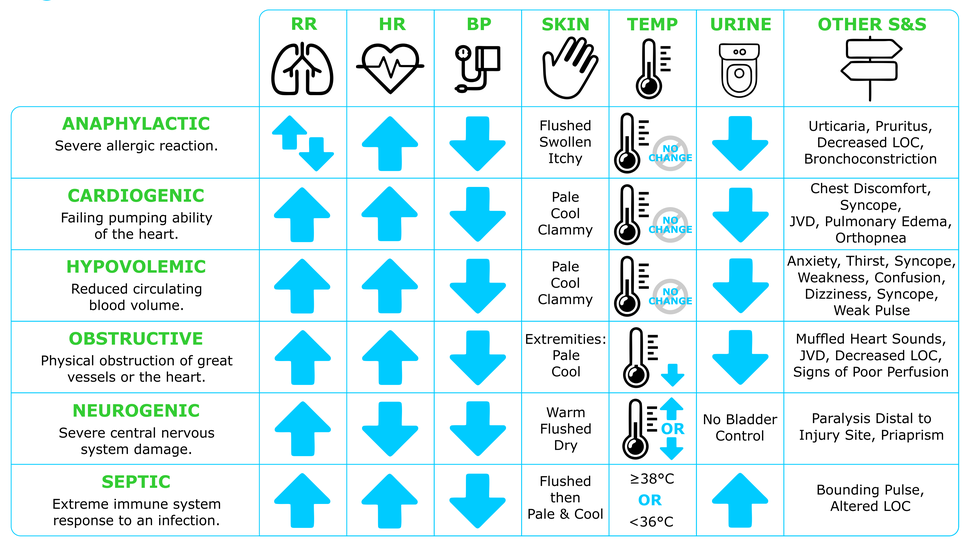
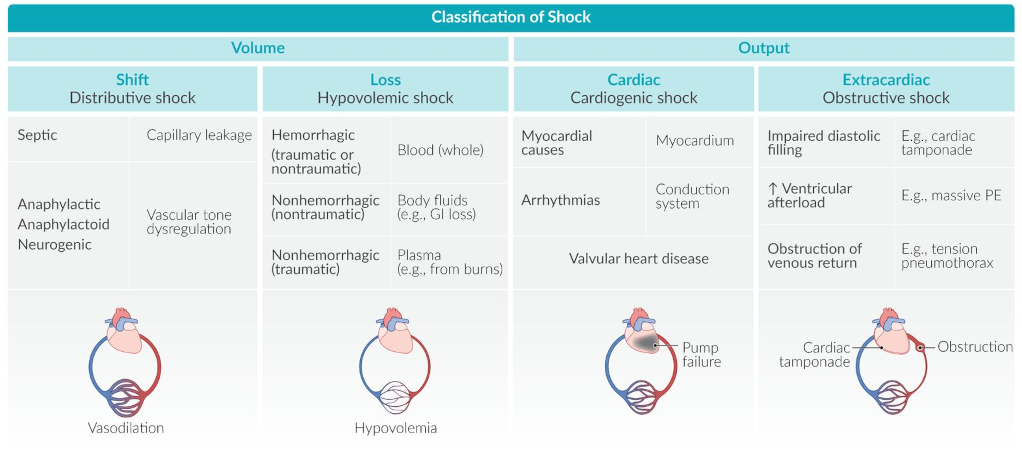
What increases or decreases during different types of shock?

Photo Credit: Event Medicine

Why are these characteristics going outside of the boundaries described by their set points [*see arrows in the diagram above]? And what does it tell us about what is going on inside of the body? To answer these questions, let's look specifically at the four main types of shock and what happens inside of the Cardiovascular System during them:

Photo Credit: Amboss

To simplify all of this, we can use the "plumbing analogy"...

Shock Type Plumbing Analogy Example
Distributive Shock "pipe problem" During anaphylaxis, the blood vessels rapidly dilate and blood pressure drops; notice the similarities to immune response during sepsis; most common type of shock (~66% of cases)
Hypovolemic Shock "fluid problem" Bleeding out from a hemorrhage, whether internally or externally; lacking sodium and water due to dehydration from excess vomiting, diarrhea, or sweating like in foodborne illnesses or heat stroke
Cardiogenic Shock "pump problem" Heart failure from Myocardial Infarction (MI), mechanical rupture, etc.
Obstructive Shock "plug / pressure problem" A block in the artery of a lung, Pulmonary Embolism (PE); air trapped within the pleural space causing pressure between lung and chest wall, Pneumothorax

Whatever the cause, all of these result in less blood getting to the tissues (hypoperfusion), and thus, less oxygen. The body tries to compensate by restricting blood flow to conserve oxygen for the brain and other vital organs, while speeding up the heart rate to overcome the drop in blood pressure. With less circulation, the body becomes cold and clammy. The ability to regulate temperature (thermoregulation) goes out of wack. This is what is creating the outward signs of shock (e.g.: pallor, or paleness).

It is interesting to note that some bodily responses might seem counter-intuitive upon first glance. For example, when someone struggles to breathe from lack of oxygen, they may start to hyperventilate in response. They breathe in more rapidly and deeply in an attempt to get more air. Yet, they might end up fainting because the brain is actually getting even less oxygen by doing that. This is because we need some carbon dioxide in the blood to be able to absorb oxygen (i.e.: the Bohr effect).

When the amount of carbon dioxide in the blood is too low (hypocapnia), it causes the pH of the blood to increase (alkalosis). Inversely, if the amount of carbon dioxide in the blood was too high (hypercapnia), then the pH of the blood would decrease (acidosis). If someone stops breathing, then there is no incoming oxygen and too much carbon dioxide starts to build up. This is why acidosis can be a symptom of breathing-related disorders, like sleep apnea and COPD. They cause slow and shallow breaths (hypoventilation). There may even be periods of time where they stop breathing altogether! Hence, the use of a CPAP machine.

All bodily functions are very tightly interwoven. Change one thing, and all others tend to shift in response. Although, they will often adapt in various ways to maintain homeostasis as much as possible.

In cases of acute trauma, such as a large wound, the body might go into hypovolemic shock as a huge amount of blood is lost. In turn, that may cause a whole slew of effects:

• Hypothermia - core body temperature of < 95° F (or 35° C)
• Metabolic Acidosis - an arterial blood pH of < 7.35
• Coagulopathy - inability for blood to clot

Together, they make up the "Trauma Triad":

Photo Credit: Event Medicine

The aspects of the Trauma Triad repeatedly reinforce one another, forming a positive feedback loop that ends in death if the processes aren't stopped and reversed through some radical interventions, such as:

• A Massive Transfusion Protocol (MTP), a plan to rapidly deliver blood products in a particular ratio to make up for blood loss
• Damage Control Surgery, temporarily closing wounds to minimize bleeding and infection until the person is more stable; the goal is to restore physiologic function as fast as possible
...etc.

One must take a multi-system approach, carefully juggling many different aspects simultaneously. What makes it tricky is that each of the problems within the Trauma Triad tends to be a feedback loop unto itself. For example: There are several different ways to try to stop the progression of hypothermia. But if they do not completely warm the body and help it to maintain that heat, then hypothermia may quickly return as the cold peripheral blood moves into the core of the body once more. This is known as "afterdrop."

I hope that I have not made all positive feedback loops seem "bad" and all negative feedback loops seem "good." I just want to emphasize that it is important to stay aware of the conditions or circumstances that they sustain. Different types of feedback loops often serve to check one another. As we learn more about life, the more that we will be able sustain it.

For example, the Trauma Triad has been expanded into the "Diamond of Death" or "Lethal Diamond." In addition to hypothermia, metabolic acidosis, and coagulopathy, the Diamond of Death adds hypocalcemia, a loss of calcium ions within the blood (Ca2+ < 2.1 mmol/L). Hypocalcemia can lead to muscle spasms, seizures, and cardiac arrest. In general, other electrolytes might also go out of balance with a severe loss of blood (such as magnesium ions). It cannot be emphasized enough how tightly interconnected everything is:

Photo Credit: Stop The Bleed

While we've spoken about some more extreme cases of trauma, statistically-speaking, some of the most prevalent ailments are actually ones that are strongly influenced by lifestyle. That includes illnesses like heart disease and diabetes (type 2).

In the case of treating chronic, long-term degenerative diseases that have a relatively slower progression, one must be cautious of merely suppressing the symptoms without truly addressing the underlying causes. The field of Functional Medicine attempts to look for underlying causes. While that field is sometimes criticized (both fairly and unfairly in my opinion), I am quite fond of the "matrix" that they use to assist with diagnosis:

Photo Credit: Functional Medicine CE

To list a few reasons why I like it...

• It takes a comprehensive approach (accounting for the Physical, Emotional, Mental, and Spiritual).
• It acknowledges the type of influence that different aspects of the history might have (Antecedents, Triggering Events, Mediators/Perpetrators).
• There is a general emphasis on restoring constructive organ system functions (Assimilation, Biotransformation & Elimination, Transport, Communication, Structural Integrity, Defense & Repair, Energy).

The bottom-most box of "Modifiable Personal Lifestyle Factors" also matches up well the "six pillars" of Lifestyle Medicine (i.e.: Rejuvenating Sleep, Physical Activity, a Whole Food, Plant-Based Diet, Stress Management, Supportive Relationships, and Avoidance of Risky Substances):

Photo Credit: The American College of Lifestyle Medicine (ACLM)

I think these types of strategies are vital for helping people to sustain health after they find healing, and to prevent disease to begin with. They facilitate the transition towards increasing amounts of autonomous self-care:

Photo Credit: Self-Care Forum

A similar set of "pillars" is used within the context of self-care programs:

Photo Credit: Self-Care Forum

They also emphasize other important aspects, such as Health Education, Hygiene, and Avoiding Risky Behaviors in addition to Risky Substances.

Thankfully, healthcare is generally moving more towards a Biopsychosocial Model of illness, one that accounts for various contributing factors beyond the strictly biological. But many ineffectual practices seem to be deeply entrenched within the healthcare system, so a more thorough adoption of it is slow going.

Photo Credit: Wikipedia

While screening can help with prevention of illness and injury, much of it hinges upon day-to-day lifestyle choices. In general, it seems like prevention is sometimes an afterthought, a public health initiative created long after a problem has already taken root in society. It can be for a variety of reasons, and not all of them are purposely malicious. To give a couple of examples:

• Sometimes important information remains obscure because it is only practiced within a highly specialized context. Dr. David Simons, co-author of the textbook Myofascial Pain and Dysfunction, once lamented that the Muscular System does not have its own specialty like Rheumatology or Neurology. This often leaves its primary role within the experience of pain unaccounted for. While physical therapy is frequently used for the purposes of rehabilitation, medical massage therapy could also be used to help alleviate the muscle pain associated with various illnesses, facilitate healing by increasing circulation to remove wastes and deliver nutrients to tissues, inducing emotional catharsis by relaxing the muscle "armoring" that appears with complex PTSD, etc.

• Sometimes what we think we know is incomplete or misleading, even in the case of things that seem to be "well-known." A good example is the work of Dr. Harold Hillman on biochemical research techniques. I think most people have a general understanding that "living" tissue is quite different from "dead" tissue, but are less aware of how that impacts scientific investigations. It may turn out that Physiology on a cellular level is quite different from what we suppose (e.g.: aligned more with the research of the biochemist Gilbert Ling).

Another important aspect of healing is the close interrelationship between the mind and the body. The idea of a "mind-body duality" has had a huge impact on science, especially Medicine.


The mind and body also have various feedback loops that operate between them in ways that are not well understood. Psychoneuroimmunology (the field which studies the link between Psychology, Neurology, Endocrinology, and Immunology) is still relatively young. Yet, it is apparent that chronic stress can lead to inflammation and other negative health impacts by inducing an excess of cytokines (like IL-6 and TNF-α), hormones (like cortisol), and so on.

The inverse is also true. For example, things like exercise and diet can influence the functioning of the mind, sometimes in profound ways. A good example is the work of Dr. Carl Pfeiffer on relieving the effects of schizophrenia with the use of intravenous nutrient supplementation and careful monitoring through urine and blood testing. One mechanism by which these types of influences could possibly occur is by chemical messages from the microbiome being carried through the vagus nerve to the brain stem.

I won't dwell too much here on the impact all of this has on various kinds of treatment, or on the treatment possibilities that it opens up. Instead, I would like to mention the significance that these connections could have on delivering a prognosis.

Most people are familiar with the "placebo effect," a healing effect that occurs because one expects it to happen. It also has an inverse, the "nocebo effect," which lies at the root of "psychosomatic illness." Therefore, I think it is quite plausible that a doctor could undermine a person's will to live by bluntly stating, "you're going to die," or by lacking good bedside manner in other ways.

Of course, we should explain their prognosis simply and clearly, without medical jargon or metaphor. If the prospects seem grim (e.g.: low life expectancy), we must be honest. People can only make good decisions when they are well-informed. We cannot give "false hope" by making promises that cannot be delivered, but we can assure them that we are doing everything that we can to help and actually act upon it.

Try to balance compassion with composure by being considerate of their experiences without over-identifying with or condoning their problems. This includes showing patience and support for grieving family members if it happens to end in death. But always silently pray for the "spontaneous remission" and continue to seek out potential cures until all people are able to find healing.


Medical Records

All diagnoses and treatments will be recorded in some form (for future reference, for billing, for legal reasons, for research, etc.). Part of this process may require us to write a "SOAP note." This stands for Subjective, Objective, Assessment, and Plan. We already have an idea of what to put within each section.
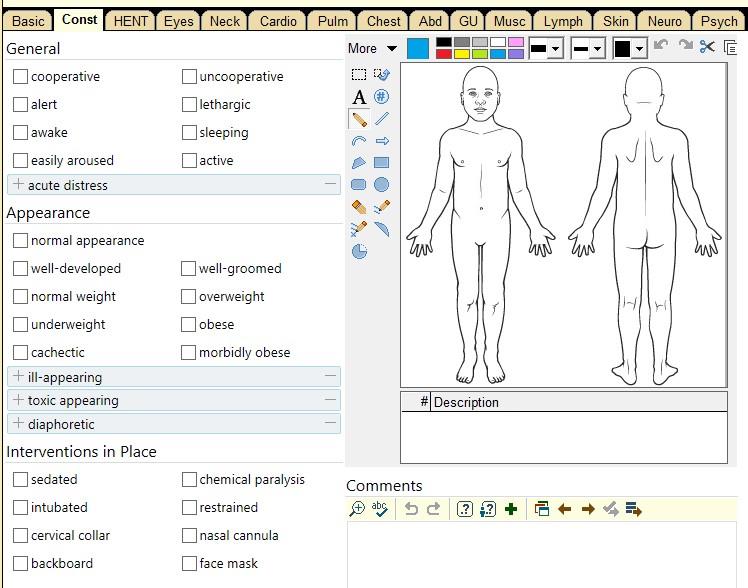
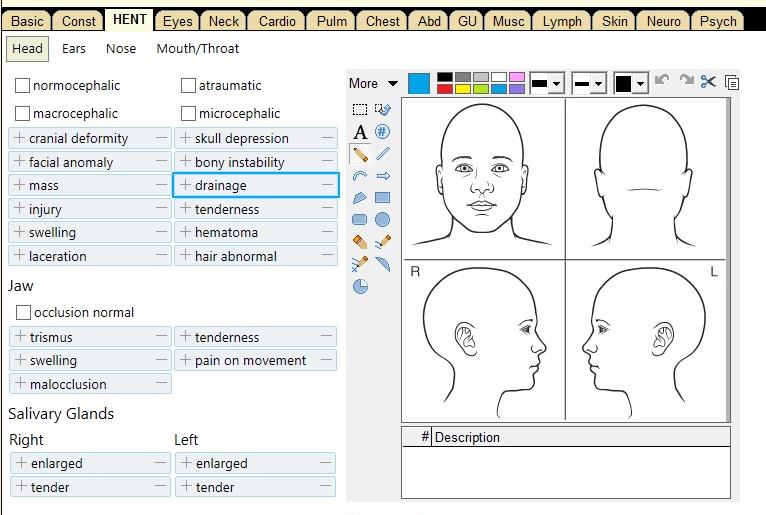
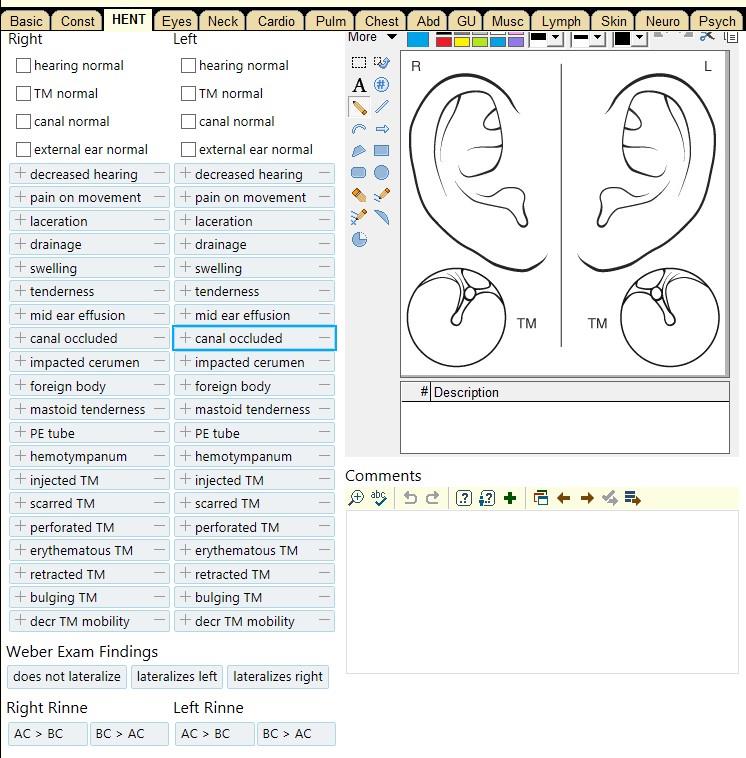
The Subjective portion would include what we uncovered during the HPI in words that are fairly close to those used by the patient. It will probably read something like a clinical vignette within an exam question. The Objective would describe the results of the Physical Exam and other diagnostics. The Assessment would be our final DDx and the Dx derived from it, usually with the evidence that supports it. The Plan would be an outline of the Tx. We need to be able to explain precisely why we are doing something. Its overall structure will seem like a case study within a medical journal.

We might also have to input our findings into some type of software in order to create an Electronic Medical Record (EMR). Since it will give a good idea of what this process entails, here are some screenshots of one such software program [thanks to REMS]. Click on the titles to open each section.

Constitution

Head, Ears, Nose, Throat (HENT)


Eyes

Neck

Cardiac, Chest

Abdomen

Genitourinary [Caution: Nudity!] Male:


Female:


Musculoskeletal


Lymphatic

Skin

Neurological

Psychological

Notice how these correspond to the things uncovered during the Physical Exam. We may need to use certain numerical codes within the EMR, such as:

International Classification of Diseases (ICD-10) for illnesses referenced within the DDx and Dx
Current Procedural Terminology (CPT) or Healthcare Common Procedure Coding System (HCPCS) for things done as part of Tx, whether that means surgeries, medications, etc.

I will refrain from describing the aspects of these systems that I find distasteful, such as the operation of the pharmaceutical and insurance industries that are attached to them, or the various litigation scams that surround them.


Hospital Structure

The more that I learn of medical education and the structure of most hospitals, the more that I can see why the healthcare system is so broken. That is not a criticism of the people involved. There are many good healthcare providers, people who are kind, considerate, humble, and hard-working. But they are good in spite of it, not because of it. Please do not lose the sensitivity that God has placed within your heart as you engage with it.

One could point out several aspects that are ripe for reform, like requiring that hospitals consistently operate with more than just a "skeleton crew" and facilitating better integration between departments (e.g.: between the ED and ICU). Depending on how this is done, it can lead to other benefits, such as quicker, cheaper, and more comprehensive diagnostics.

Diagnosis and treatment should be within the reach of everyone. The number of available doctors is often relatively small in comparison to the surrounding population. Likewise, laboratories are often expensive to furnish and operate, with test equipment that can be delicate and overly complex. We must put hard-won knowledge into practical use, simplifying and making accessible as much as possible.

Generally, modern Medicine shines when it comes to stabilizing acute trauma in order to prevent death. It tends to not do as well in regards to long-term degenerative diseases, often turning into management of symptoms rather than the provision of cures. This is of no fault of its own per se, but a result of so many environmental factors being stacked against it. Like many of the spectrums that we've already described, I like to think of healthcare as a continuum as well:


To the left of the spectrum, we have things that affect the individual. This can include readily tangible lifestyle choices, like the quality of our diet, exercise, sleep, and so on. It also includes how we maintain our mental-emotional well-being, how we are doing psychologically.

To the right of the spectrum, we encompass more and more of the surrounding influences. This can include the state of one's interpersonal relationships (or the lack of them). As we go farther out, it also encompasses various environmental stressors (e.g.: exposure to toxins, noise pollution, etc.).

Ideally, healthcare would be comprehensive in its approach, focusing on the entire spectrum for each individual and expanding outward to address ever larger portions of our shared environment. Therefore, it would also be integrated into our lifestyle. As the saying goes, "prevention is better than cure."

More fundamental changes are necessary than simple reforms. To give one such example:

As an result of the economic crisis in Greece in 2008, many people were left without healthcare. This led to the creation of a network of many small "solidarity clinics." At one such clinic in the city of Thessalonik, a new "integrative model" was developed. To quote the psychiatrist Frosso Moureli:
...So, the major critique of the Medicine, the dominant Medicine, was that it separates the body from the psyche, the somatic from the psychology. It separates the person from its environment. It doesn't take into consideration the relation between the doctor and the patient. And most of all, it divides the body, the organism, into parts and doesn't connect them again. It loses everything that has to do with the totality of the organism...
In practice, this resulted in patients initially meeting with three different types of healthcare providers as a group: a general practitioner, a psychiatrist/psychologist, and a social worker. There is already research on the effectiveness of combining GPs and psychiatrists, as well as GPs and social workers. By having multiple specialists working together simultaneously in this way, many benefits are possible. For example, a social worker could help a patient draw up an Ecomap to help them to understand the support system that they can rely on as they heal from the physical treatment provided by a GP, while a psychologist can give them strategies to cope with any anxiety that they might be feeling about it.

This kind of comprehensive and collaborative care, with an emphasis on prevention, is what I think Medicine is becoming. Further, I believe that the creation of medicines themselves will radically change. We will find different uses for pre-existing medications, and the idea of "proprietary medicines" will cease to exist, only "generics" with formulas that are open to the public. In turn, these will be more tightly integrated with food production on the local level, especially within areas where these things are inaccessible.

This is because the materials for practicing Herbalism can be grown and prepared relatively easily. Likewise, a healthy diet can do more than cure deficiencies like dehydration and malnutrition through Oral Rehydration Therapy (ORT) and Ready-to-Use Therapeutic Food (RUTF). It could be a vital component in handling other diseases as well. Our ability to apply these tools properly will increase as fields like Nutrigenomics develop, so we must remain open to every possible avenue of helping others to find healing.


Self-Care and The Heart of a Healer

Most people become part of healthcare because they genuinely want to help others. However, being repeatedly exposed to other's pains can lead to vicarious trauma, and eventually, to compassion fatigue. In other words, one can deal with other's trauma so much that they become traumatized themselves and somewhat apathetic as a result.

Often, a feeling of "overcare" is at its root, becoming overly identified with another's pain to the point of excessive worry. It has to be balanced by a sense of self-compassion.

Interactions with people in the process of dying and grieving are probably some of the most humbling, but do not allow them to turn into guilt or shame. There is only so much that a single person can do. Take care of your mental-emotional health by anticipating these challenges long before you encounter them. Cultivate routines to maintain your well-being and create support networks to share them with others, both inside and outside of Medicine. Monitoring the state of one's own health can be tricky. Sometimes we are too close to our own problems to get a good look at them and need other people to hold us accountable.

Funnily enough, a lot of this is going to revolve around the same lifestyle recommendations made earlier: maintaining a healthy diet, getting good sleep, regularly practicing stress management, etc.

Some of this is a matter of getting a routine in place. For example, in the case of diet, that could mean meal planning. In the case of sleep, that could mean regular exposure to sunlight to balance melatonin, using blackout curtains, etc. There are various apps that can help too, such as CBT-i Coach to handle insomnia and TimeShift to create a sleep schedule during shift work. Try to prevent burn out as much as possible.

Our ability to take care of others is often determined by how well we take care of ourselves. Similarly, we are able to make better decisions when we are thorughly familiar with a subject. Learning and healing are intrinsically connected. Let's review the clinical reasoning cycle that we mentioned before [the next two tables are from the same reference, Clinical Reasoning: Instructor Resources]:

Step Description Example Scenario
Consider the patient situation
Describe or list facts, context, objects, or people • This 60 year old patient is in ICU because he had an abdominal aortic aneurysm (AAA) surgery yesterday
Collect cues / information
Review current information (e.g.: handover reports, patient history, patient charts, results of investigations and nursing/medical assessments previously undertaken) • He has a history of hypertension and he takes betablockers
• His BP was 140/80 an hour ago
Gather new information (e.g.: undertake patient assessment) • I've checked his BP and it is now 110/60
• Temperature 38 degrees
• Epidural running @ 10ml/hr
Recall knowledge (e.g. physiology, pathophysiology, pharmacology, epidemiology, therapeutics, culture, context of care, ethics, law, etc.) • BP is related to fluid status
• Epidurals can drop the BP because they cause vasodilation
• In ICU, we have standing orders for epidural management
Process information
Interpret: analyze data to come to an understanding of signs or symptoms; compare normal vs. abnormal • His BP is low, especially for a person who is normally hypertensive
Discriminate: distinguish relevant from irrelevant information; recognize inconsistencies, narrow down the information to what is most important, and recognize gaps in cues collected • His temp is up a bit, but I'm not too worried about it - I'm more concerned about his BP and pulse
• I'd better check his urine output and his O2 sats
Relate: discover new relationships or patterns; cluster cues together to identify relationships between them • His hypotension, tachycardia, and oliguria could be signs of impending shock
• His BP went down after we increased the epidural
Infer: make deductions or form opinions that follow logically by interpreting subjective and objective cues; consider alternatives and consequences • His BP could be low because of blood loss during surgery or because of the epidural
Match current situation to past situations or current patient to past patients (usually an expert thought process) • AAAs often have hypotension post op
Predict an outcome (usually an expert thought process) • If I don't give him more fluids he could go into shock
Identify problem / issue
Synthesize facts and inferences to make a definitive diagnosis of the patient's problem • He is hypovolemic and the epidural has worsened the BP by causing vasodilation
Establish goals
Describe what you want to happen, a desired outcome, a time frame • I want to improve his hemodynamic status - get his BP up and urine output back to normal over the next hour
Take action
Select a course of action between different alternatives available • I will call the doctor to get an order to increase his IV rate and to give Metaraminol if needed
Evaluate
Evaluate the effectiveness of outcomes and actions; ask: "Has the situation improved now?" • His BP is up for now but we will need to keep an eye on it as he may still need Metaraminol a bit later; his urine output is averaging > 30mL/hr now
Reflect on and process new learning
Contemplate what you have learned from this process and what you could have done differently • Next time I would...
• I should have...
• If I had...
• I now understand...


Our ability to carry out these steps is associated with a particular type of mindset:

Habit Description
Confidence Assurance of one's reasoning abilities
Contextual Perspective Considerate of the whole situation, including relationships, background, situation, and environment
Creativity Intellectual inquisitiveness used to generate, discover, or restructure ideas; the ability to imagine alternatives
Flexibility Capacity to adapt, accommodate, modify or change thoughts, ideas, and behaviors
Inquisitiveness Eagerness to learn by seeking knowledge and understanding through observation and thoughtful questioning in order to explore possibilities and alternatives
Intellectual Integrity Seeking the truth through sincere, honest processes, even if the results are contrary to one's assumptions or beliefs
Intuition Insightful patterns of knowing brought about by previous experience and pattern recognition
Open-Mindedness Receptiveness to divergent views and sensitivity to one's biases, preconceptions, assumptions, and stereotypes
Perseverance Pursuit of learning and determination to overcome obstacles
Reflective Contemplation of assumptions, thinking and action for the purpose of deeper understanding and self-evaluation

All of these constructive qualities find their source in One greater than ourselves alone. Healers only help to facilitate health, for every miracle of life is accompanied by an act of personal faith.

Eventually, all will come to know eternal life through the perfection of virtue, a boundless sense of compassion and care, a transcendent Love that makes everything whole. I look forward to that moment with eager anticipation, and I hope that you will join me. Thank you for reading

"The last enemy that shall be destroyed is death." ~ 1 Corinthians 15:26

"The Healer"
by
Nathan Greene


Resources & References

I tried to put most of the reference material as in-text hyperlinks or photo credits near their corresponding sections, but there are a handful of others that helped to inspire this document that were not included. Some of the best examples within this article come from the following:

Strategies for Generating Differential Diagnoses by The Center for Academic Achievement
Medical Scribe
Diagnosis: Fundamental Principles and Methods by Martin S. Gale
• The RoS and Physical Exam checklists are based on The Perfect H&P Notebook

How to Ace A&P Exams - Advice from an Anatomy Professor by Siebert Science
I’m A Doctor. If You're In Med School, Please Watch This Video by Justin Sung
Learn How to Take a Good Medical History in 10 Minutes (Systematic Approach) by Rhesus Medicine
• How to take a medical History - OSCE, SOAP notes, Clinical Skills (Part 1 and Part 2) by Medicosis Perfectionalis

...But most of all, I am grateful to God for showing me how to put it all together. I could have never understood any of this otherwise.