BackReturn Home

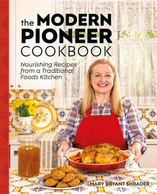
Full Title: The Modern Pioneer Cookbook
Nourishing Recipes From a Traditional Foods Kitchen
Author(s): Mary Bryant Shrader
Publishing / Edition: DK, 2023

Click here for the Table of Contents of the book


Content Review

This cookbook revolves around the idea of creating a kitchen that is "traditional" (i.e.: where many things are made from scratch) and "zero-waste" (by reusing scraps, preserving, and so on).

Mary is very generous with her knowledge, running both a website and a corresponding YouTube channel, Mary's Nest. She even offers a homeschool curriculum for teaching these same sorts of skills to children. Altogether, it is such an incredible wealth of free, practical information. You can tell that it is a labor of love. All of the writing on this website is motivated by a similar compassion for others...

During the pandemic lockdown, I was conversing with some online friends about what each of us was doing to make money stretch when preparing our meals.

For example, I would rely heavily upon grains (like brown rice), beans, and frozen/canned vegetables. In the proper proportions, I could make meals that were relatively balanced. Then, I would season them with cheap spices to keep them from feeling bland (e.g.: salt, pepper, onion or garlic powder, Italian and Cajun mixes, chili flakes, etc.). And finally, I would fluctuate through different combinations in order to vary my diet even further (e.g.: lentils with carrots and green beans, black beans with corn and tomato, etc.). My life was/is very austere, but I had a place to store food and to cook so I could get by on as little as ~$40/month.

I wanted to help everyone more, so I meditated over what else I could share. This research became the article Abundance Through Food Preservation & Economy and how I first heard of Mary's work. I have been reminded of it from time to time since then.

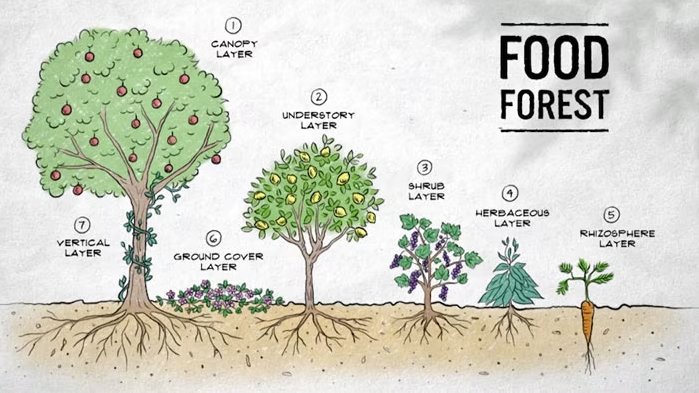
Making sure that everyone is well fed is a fundamental aspect of what I am working towards, so it seemed natural to elaborate upon this idea of a traditional, zero-waste kitchen. It is often complemented by growing a "potager" (i.e.: a garden that is filled with seasonal vegetables, fruits, herbs, edible flowers, etc.). One does not have to own land or have a yard in order to do this. Some aspect of it is possible within every living circumstance, such as growing herbs on a kitchen windowsill or growing pots of vegetables on a small porch.

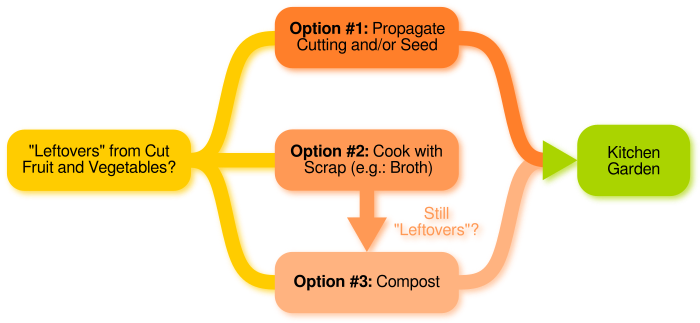
As our kitchen and garden become more tightly coupled to one another, we are presented with opportunities for making even more food! For example, we have several options whenever we are faced with the "leftovers" from cut fruit or vegetables:

1. If we know something about the plant, we can propagate a cutting and/or a seed from it.
2. We can cook things with scraps directly (e.g.: vegetable broth).
3. We can make compost for growing more plants.


[In Progress...]


Related Resources

Lease the eBook from Google Play $