Back
•
Return Home
Full Title:
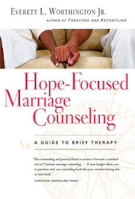
Hope-Focused Marriage Counseling
A Guide to Brief Therapy
Author(s):
Everett L. Worthington Jr.
Publishing / Edition:
InterVarsity Press, 2005
Click here for the
Table of Contents
of the book
Acknowledgments
Preface
Introduction
Hope-Focused Marriage Therapy
Advances In Our Understanding of Marriage
Marriage Is Usually Beneficial
Marriage, Not just Living Monogamously, Is Good for People
Seeing Marriage as a Covenant, Not a Contract, Can Make Marriages Last Longer
The Five-to-One Gottman Ratio Ain't as Simple as It Looks
Being a Bulldog About Solving Problems Will Often Bite You in the End
It Matters If You Cool Off After an Argument
Whining Accusations Keep People Mired in Negative Emotions
When Conflict Dramatically Worsens, It's Time to Take Problems Seriously
Negative Thoughts and Emotions Are Intertwined
You Can't Predict Everything with Behavior
Stress and Personal Factors Increase Negative Emotions
Personal Issues Are More Important Than We Thought
What Are the Implications for This Book?
Advances In Couples Therapy
Evidence-Based Couples Therapy
Strengths of Hope-Focused Marriage Counseling
Focus on the Christian View of Hope
Easily Remembered Definition of Love
Focus on Faith and Spirituality
Assessment at the Beginning of Counseling
Motivation for Couples to Do the Homework
Separation by Chapter of Different Areas of Marriage
Emphasis on the Emotional Bond
Advances In Enrichment and Prevention
Research on Hope-Focused Marriage Enhancement and Its Components
Post-1998 Research
Other Studies of Forgiveness
Invitation
References
Part One: Theory
Chapter 1.
Brief Marital Counseling
Walking Through The Valley of The Shadow of Marital Death
An Overview of the Book and Hope-Focused Marriage Counseling
Effectiveness (or Ineffectiveness) of Most Marital Counseling
Is the Goal I Stated Appropriate?
Conjoint Marital Counseling: The Preferred Approach
Hope-Starved Marriages
Marital Counseling: Brief or Briefer
Who Benefits from Brief Therapies?
Thinking Brief
Not Merely Time
Does Brief Marital Counseling Change the Causes of Marital Discord?
Is Hope-Focused Marital Counseling Consistent with Scripture?
What Are the Implications of Brief Marital Counseling for Practice?
What Are the Major Differences Between My Previous Traditional Approach and the New Approach?
Summary
Chapter 2.
Bird's-Eye View of Hope-Focused Marriage Counseling
Forming and Maintaining a Good Relationship with Each Partner
Goal: Better Marriage, Less Divorce
Focus: Promote Hope
Strategy: Correct Weaknesses In Love, Faith, and Work
The Strategy
Definitions
Teaching and Using a Strategy
Target: Areas of Change
Assess and Give Feedback
Interventions: Planning Sensible Counseling
Making Change Sensible
Planning Different Actions in Different Stages of Counseling
Employing Strategically Informed Tactics
Tailoring Treatment to Fit Clients
Setting Time Limits
Planning Each Session in Writing
Being Flexible
Overview
Chapter 3.
Using the Strategy to Promote Hope
Conceptualizing The Cause of Marital Troubles
Discipleship
The Primary Cause of Marital Problems: Loss of Love
One Secondary Cause: Losing Faith
Another Secondary Cause: Reducing Work on the Marriage
Overall
Manifestations of The Loss of Love, Faith, and Work
People's Underlying Needs
Relationship Histories
Marital Interactions
The Marital Relationship
The Solution
Promoting Hope
The Counseling Relationship In Promoting Hope
Helpful Interactions Between the Counselor and the Partners
Valuing each partner
Valuing the marriage
Unhelpful Interactions Between the Counselor and the Partners
Practical Actions In Promoting Hope
Presuppositions In Promoting Hope
Defeating Doubt In Promoting Hope
Summary
Chapter 4.
Applying the Strategy to Eight Areas of Marriage
Central Beliefs and Values
Love
Self
Commitment
Core Vision of Marriage
Confession and Forgiveness
The Road-Test of Love
Reconciliation
The Daily Operation of Marriage
Communication
Types of Communication Problems
Loving Communication
Conflict Resolution
Cognition
Closeness
Distance, Coaction, and Intimacy
Types of Closeness
Commitment
Contracts and Covenants
Commitment's Components
Summary
Part Two: Interventions
Chapter 5.
Precounseling Interventions
Initial Phone Contact
Having Partners Complete Assessment Instruments
Precounseling Videotape
What the Research Shows
How I View Precounseling Videotapes
Pamphlet
Summary
Chapter 6.
Assessment Interventions
Initial Assessment
Intake Form
The First Session
Evaluations of the Nine Areas of Marriage
First-Interview Observation of Communication and Conflict Resolution
Questionnaires
Prognosis
Your Written Assessment Report
Assessment During Ongoing Counseling
Your Clinical Observations
Couples' Improvement or Lack of Improvement
Your Own Reactions to the Clients
Brief Summary
Assessment Prior To The Final Session
Looking Back, Looking Ahead
Chapter 7.
Interventions for Drawing on Central Values
Your Attitude Toward Clients' Values: Respect
Revealing Your Own Values
Revealing Your Values During Counseling
Assessing Clients' Values
Using Homework to Find Out About Central Values
Using Homework to Promote Awareness of Central Values
Challenging Clients' Values
General Tactics for Challenging Values
Using Homework to Help a Partner Think About Your Challenge
Expect to Deal with This Value
Summary
Chapter 8.
Interventions for Revisioning a Core Vision
Assessing The Core Vision
Exploring the Core Vision Through Taking Histories
Assessing the Current Vision of the Marriage
Get a Summary Statement of the Marital Vision
Changing The Core Vision
Three Basic Steps in Changing the Core Vision
Dealing with Painful Memories
Using Homework to Get Closer to the Fleshed-Out Vision
Dealing with Unrealistic Aspects of the Vision
Changing the Emotional Climate of the Marriage
Having Partners Express Their Love to Each Other
Revising the Vision Statement
Summary
Chapter 9.
Interventions for Promoting Confession & Forgiveness
Confession and Forgiveness
Who's Responsible?
Becoming Experts
What the Counselor Has to Work With
Promoting Confession
Preparing Partners to Deal with Confession and Forgiveness
Steps for Promoting Confession
Promoting Forgiveness
Helping People Prepare to Forgive
Dealing with Difficulties in Forgiving
Helping People Walk Through the Steps of Forgiving
Helping People Forgive After Conflict
Summary
Chapter 10.
Interventions for Strengthening Communication
Principles for Training the Couple in Better Communication
Easy-to-Make Errors
An Effective Training Method
Help Both Partners Know the Objective of Training
Communicating Faith Working Through Love
Making Couples Aware of Their Communication Patterns
Training Couples to Better Communicate Love
Helping Couples Communicate Love Directly
Helping Partners Communicate Love Positively
Helping Couples Communicate Love by Listening
Helping Partners Communicate Love by Sharing Information
Helping Partners Communicate Love by Sharing Their Experiences
Helping Partners Communicate Love by Sharing Feelings
Helping Couples Communicate Love by Sharing Their Values
Helping Couples Communicate Love by Creating Time and Opportunities to Communicate
Helping Couples Avoid Devaluing Communications
Beyond Leveling and Editing
Chapter 11.
Interventions for Aiding Conflict Resolution
Preparing the Couple to Resolve Conflicts
Increasing Partners' Awareness of Their Conflict and Resolution
Increasing Awareness of Topics of Disagreement
Increasing Awareness of How Partners Try to Resolve Conflict
Discovering What Happens When Partners Disagree
Helping Couples Stop Devaluing Each Other
Increasing the Ratio of Positive to Negative Interactions
Helping Couples Avoid Pulling Triggers
Helping Couples Stop Cross-Complaining
Helping Couples Stop Personalizing Issues
Helping Couples Value Each Other
Presenting the LOVE Acrostic
Teaching Couples to Listen and Repeat
Teaching Couples to Observe Their Effects
Teaching Couples to Value Their Partners
Teaching Couples to Evaluate Both Partners' Interests
If You Need More...
Dealing with the Couple's Failures
How Couples Can Deal with a Partner's Perceived Attack
Dealing with Your Own Disappointment as the Counselor
Dealing with the Couple's Successes
Summary
Chapter 12.
Interventions for Changing Cognition
Guidelines for Changing Partners' Cognition
Should You Deal with Partners' Cognition?
Change Cognition by (First) Teaching the Cognitive Paradigm
Change Cognition by (Second) Changing Specific Cognition
Correcting Couples with Poor Actions and Cognition
Negative Cognition Might Be True
Changing Cognition to Focus on Love, Work, and Faith
Teaching The Cognitive Paradigm
Reducing Negative Thinking
Making Partners Aware of Their Negativity
Focusing on the Positive Aspects of Negative Behavior
Making the Negative Thinking More Positive
Using Journals and Thought Logs
Changing Attributions of Blame
Helping Partners Respond with Acceptance Rather than Blame
Keeping a Record of Attempts to Change Attributions
Changing Negative Expectations About The Marriage
Changing Negative Assumptions About The Marriage
Maria and Bobby: A Case Study
Changing Partners' Standards for the Marriage
Summary
Chapter 13.
Interventions for Stimulating More Closeness
Some Guidelines for Dealing with Closeness
Increase Partners' Awareness of Closeness Patterns
Emphasizing the Possibility of Improvement
Making Couples Aware of Their Intimacy Deficiency
Creating a Physical Representation of Intimacy
Cleave: Organizing Interventions to Promote Closeness
Changing Actions to Positive
The Love Bank and Associated Interventions
Dealing with Objections to Love-Bank Homework
Loving Romance
Draw on the Couple's Memories of Romance
Using the Office to Explore Emotional Closeness
Structuring Time Together
Adjusting Time Schedules
Establishing Bounded Couple Time
Reading Together
Adjusting Intimacy Elsewhere
Breaking Up the Emotional Distancer-Pursuer Pattern
Helping Develop Spiritual Intimacy
Valuing One's Partner
Enjoying Oneself and One's Partner Sexually
Assessing Sexual Functioning
Treating Sexual Problems
Needed: Good Information About Sex
Summary
Chapter 14.
Interventions for Cementing Commitment
Guidelines for Promoting Commitment
Minimizing Heavy-Handed Emphasis on Shoulds
Assuming a Lifelong Commitment
Securing an Explicit Commitment to Try
Promoting a Commitment to Therapy
Promoting a Commitment to Work Outside of Therapy
Avoiding Divorce
Threats of Divorce
Couples' Beliefs on Divorce
When the Threat of Divorce Goes Public
Staying Together for the Sake of the Kids
Commitment to Marriage: Covenant or Contract?
Promoting Covenantal Commitment to God
Matching Your Rationale to Your Clients
Teaching Directly About Covenantal Commitment
Correcting Commitment Drift
Strengthening The Components of Commitment
Helping Partners Become More Satisfied with Their Marriage
Eliminating Competitors to the Marriage
Sharing Investments
Solidifying A Strengthened Commitment
Summary
Chapter 15.
Interventions for Promoting Couple Commencement from Counseling
Promoting Commencement
Developing Independence As Commencement Approaches
Difficulties of Ending Counseling
Encouraging Independence
Having Partners Summarize What They Learned
Have Partners Plan What They Will Do Next
Creating a Joshua Memorial
Discussing the Final Assessment Report
Opening the Door to Additional Counseling
Taking Stock of What You Learned as a Counselor
Learning from Failures
Learning from Successes
Being More Creative as a Counselor and Theorist
Chapter 16.
Essentials of Hope-Focused Marriage Counseling
Twelve Essential Components That Define The Approach
Testable Propositions
Twelve Semi-Essential Interventions
Drawing From Many Approaches
Some Theological Musings
God Is In Control
Appendix
Notes
Author Index
Subject Index
Scripture Index
About the Author
Content Review
[In Progress...]
Related Resources
•
Lease the eBook
from Google Play
$
• Books about similar topics:
Ripley, Jeniffer, and Everett Worthington.
Couple Therapy
. InterVarsity Press, 2014.